



Updated July 30, 2026
Grilled vegetables should never feel like the obligatory green thing taking up space beside the main event. With the right cut, enough heat, and a little seasoning, vegetables get smoky edges, concentrated flavor, and just enough char to make people reach for seconds on purpose.
The basic process from the original Lane’s guide still works: wash, cut, season, grill, and finish with sauce if you want it. The trick is knowing that zucchini and potatoes do not live on the same timeline. This guide shows you how to prepare and grill the most popular vegetables so everything reaches the table tender, browned, and still recognizable.
What You’ll Need
What Vegetables Are Best for Grilling?
Zucchini, yellow squash, bell peppers, mushrooms, eggplant, onions, asparagus, corn, broccoli, cauliflower, tomatoes, potatoes, and carrots can all be grilled successfully. The best starting choices for beginners are zucchini, bell peppers, mushrooms, and onions because they are easy to prepare and give you a generous window between raw and overcooked.
Tender Vegetables
Zucchini, yellow squash, asparagus, tomatoes, mushrooms, and thin bell pepper pieces cook quickly over direct heat.
Firm Vegetables
Onions, eggplant, whole peppers, corn, broccoli, and cauliflower need slightly more time or a more protected cooking method.
Dense Vegetables
Potatoes, sweet potatoes, beets, and carrots benefit from thinner cuts, indirect heat, or partial cooking before they reach the grill.
Quick Answer
The easiest vegetables to grill are zucchini, bell peppers, mushrooms, onions, and asparagus. They cook fairly quickly, develop visible browning, and are easy to check for tenderness.
How to Prepare Vegetables for the Grill
- Wash the vegetables. Rinse fresh produce under cool running water. Scrub vegetables with thick skins, such as potatoes and squash, with a clean produce brush.
- Dry them well. Surface water creates steam and slows browning. Pat the vegetables dry before cutting and seasoning.
- Cut evenly. Pieces of similar size cook at a similar rate. Keep vegetables large enough that they will not fall through the grate.
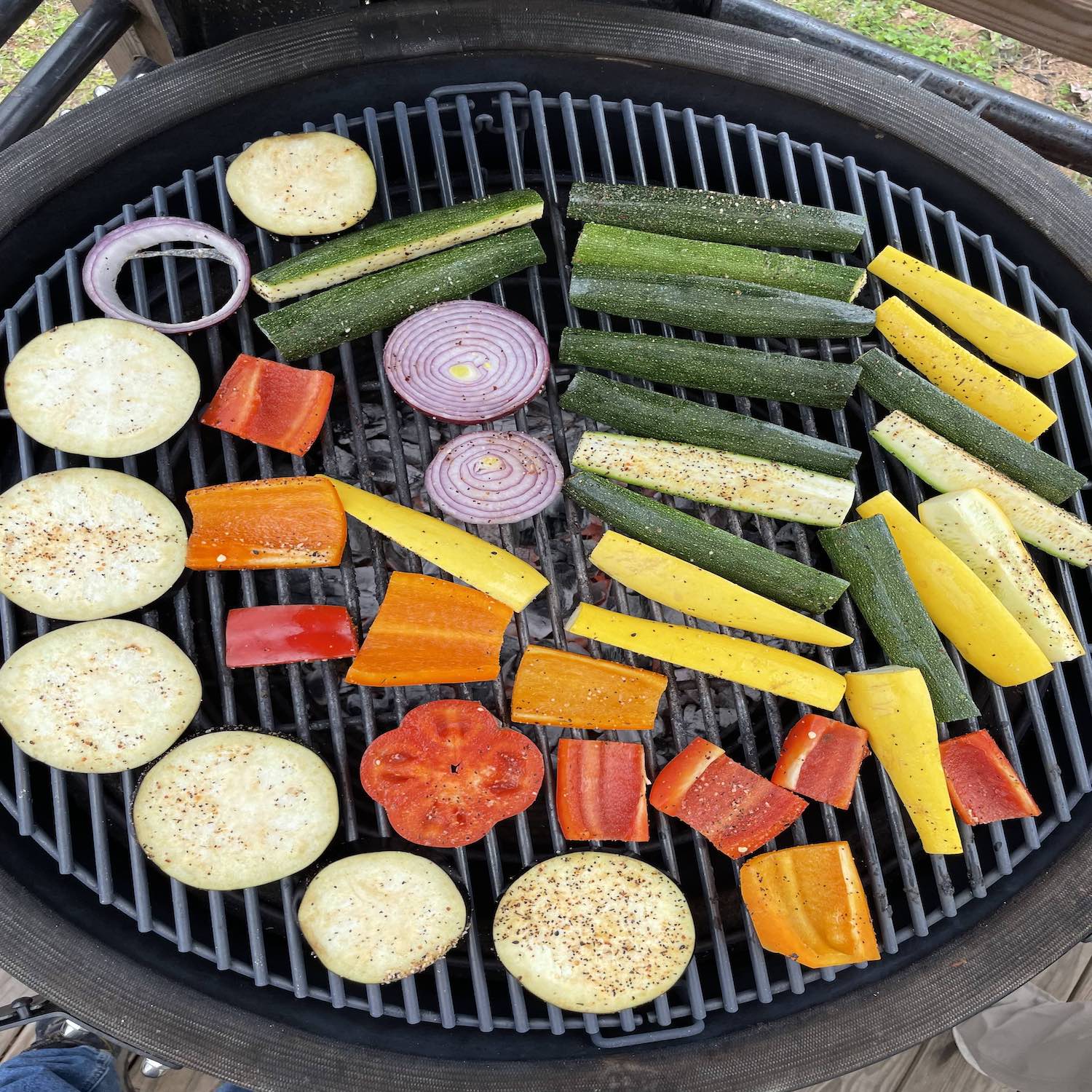
- Match the cut to the vegetable. Slice zucchini and eggplant into planks, cut peppers into broad panels, quarter onions through the root, and leave smaller mushrooms whole.
- Give dense vegetables a head start. Steam or microwave potatoes and carrots for 5–8 minutes before grilling, or cut them thin and cook over indirect heat until tender.
- Coat lightly with oil. Toss with just enough high-heat cooking oil to create a thin, even coating. Too much oil can cause flare-ups and make seasoning slide off.
Use a separate cutting board, plate, and utensils for vegetables if you are also preparing raw meat, poultry, or seafood. Vegetables may be the side dish, but cross-contamination does not respect the menu hierarchy.

Best Lane’s Seasonings for Grilled Vegetables
The original guide recommended Sweet Lemon Pepper, Ancho Espresso, and Garlic², and all three bring something different to the grill. Toss the vegetables with oil first, sprinkle on the seasoning, and turn everything gently until the pieces are evenly coated.
Sweet Lemon Pepper
Great on asparagus, zucchini, yellow squash, broccoli, green beans, and mushrooms.
Ancho Espresso
Its deeper flavor works especially well with mushrooms, eggplant, onions, sweet potatoes, and grilled corn.
Garlic²
A dependable all-purpose choice for potatoes, zucchini, peppers, mushrooms, asparagus, and mixed vegetable baskets.
Chili Lime
Use it on corn, peppers, zucchini, onions, avocado, and vegetables headed for tacos or grain bowls.
Greek Seasoning
A natural match for zucchini, eggplant, tomatoes, peppers, onions, and vegetable skewers.
Q-NAMI
Excellent on mushrooms, onions, broccoli, eggplant, cabbage, and other vegetables that can carry a savory punch.
Start lighter than you would on a large cut of meat. Vegetables have more surface area relative to their size, so a modest coating goes a long way. You can always add another sprinkle at the table. Undoing a salt avalanche is considerably less convenient.
Directly on the Grates, in a Basket, on Skewers, or in Foil?
Directly on the Grates
Best for large, sturdy pieces such as zucchini planks, eggplant slices, pepper panels, onion wedges, asparagus, corn, and halved cabbage. This method creates the strongest grill marks and char.
Grill Basket or Pan
Best for sliced mushrooms, broccoli florets, chopped peppers, green beans, and mixed vegetables. A basket keeps smaller pieces out of the fire while still allowing browning.
Skewers
Best for evenly cut peppers, onions, mushrooms, zucchini, and tomatoes. Group vegetables with similar cook times on the same skewer so one ingredient does not finish half an hour before its neighbor.
Foil Packets
Best for potatoes, carrots, onions, and vegetables you want softer and more steamed than charred. Leave room for heat to circulate and open packets carefully because trapped steam is extremely enthusiastic.
How to Grill Vegetables Step by Step
- Preheat the grill. Aim for 375–425°F for most vegetables. The original guide’s 350°F medium heat also works, but vegetables may need a little longer.
- Clean the grates. Brush away residue after the grill heats, then lightly oil the grates if your grill tends to stick. Never spray cooking oil directly into a lit grill.
- Wash, dry, and cut. Keep pieces uniform and choose a shape that will stay on the grate or fit your basket.
- Oil and season. Toss vegetables with a light coating of oil and your Lane’s seasoning of choice.
- Start the dense vegetables first. Potatoes, carrots, corn, and thick onion pieces need more time than asparagus, tomatoes, and zucchini.
- Arrange in a single layer. Leave a little space between pieces so heat can circulate and moisture can escape.
- Let the first side brown. Avoid constant movement. Turn once you see color and the vegetable releases easily.
- Continue cooking until tender. Turn occasionally and move pieces to a cooler zone if the exterior darkens before the center softens.
- Add sauce near the end. Brush it on during the final 1–3 minutes so the sugars caramelize without burning.
- Serve promptly. Finish with another light sprinkle of seasoning, fresh herbs, citrus, cheese, or a sauce if desired.
Vegetable Grilling Times
These ranges are starting points for a grill running around 375–425°F. Actual time depends on vegetable size, thickness, grill heat, and how tender you like the final result. Start checking early and use texture and browning as your guide.
Zucchini & Yellow Squash
Cut: ½-inch planks or thick rounds
Time: 6–10 minutes
Done: Tender with browned grill marks
Bell Peppers
Cut: Wide panels or large chunks
Time: 8–12 minutes
Done: Softened with blistered edges
Mushrooms
Cut: Whole small mushrooms or halved large ones
Time: 8–12 minutes
Done: Browned and tender
Asparagus
Cut: Trimmed whole spears
Time: 6–10 minutes
Done: Bright, lightly charred, and crisp-tender
Onions
Cut: Thick rounds or root-attached wedges
Time: 10–15 minutes
Done: Softened with browned edges
Eggplant
Cut: ½-inch rounds or planks
Time: 8–12 minutes
Done: Fully tender and browned
Corn on the Cob
Cut: Husked whole ears
Time: 12–18 minutes
Done: Bright kernels with scattered char
Broccoli & Cauliflower
Cut: Large florets or steaks
Time: 10–15 minutes
Done: Crisp-tender with browned tips
Potatoes & Carrots
Cut: Thin slices or partially cooked chunks
Time: 10–15 minutes after partial cooking
Done: Easily pierced with a fork
How Do You Know Grilled Vegetables Are Done?
Most vegetables are ready when they are easily pierced with a fork but still hold their shape. Look for browned or lightly charred edges. There is no universal internal temperature needed for quality, so tenderness matters more than the clock.
When to Add BBQ Sauce to Grilled Vegetables
The original guide recommended Pineapple Chipotle, Kinda Sweet, and Southbound Carolina Mustard. Each can turn a simple basket of vegetables into a side dish with a little more swagger.
- Pineapple Chipotle: Try it with peppers, onions, zucchini, sweet potatoes, corn, and pineapple.
- Kinda Sweet: Use it on mushrooms, onions, potatoes, carrots, cabbage, and mixed vegetable skewers.
- Southbound: Its mustard-style tang works well with potatoes, onions, cabbage, Brussels sprouts, and cauliflower.
Brush sauce onto both sides during the final 1–3 minutes of grilling. Most barbecue sauces contain sugars that can burn over direct heat if added too early. If the sauce starts darkening faster than you want, move the vegetables to indirect heat.
How to Grill Different Vegetables at the Same Time
The secret is not convincing every vegetable to cook at the same speed. The secret is giving each one a start time that makes sense.
- Start dense vegetables first. Add partially cooked potatoes, carrots, corn, and thick onions.
- Add medium-cooking vegetables next. Follow with peppers, eggplant, mushrooms, broccoli, and cauliflower.
- Finish with tender vegetables. Add zucchini, yellow squash, asparagus, and tomatoes last.
- Use separate zones or baskets. This lets you remove one vegetable without launching a search-and-rescue mission through the entire mix.
If you are making skewers, place vegetables with similar cooking times together. All-mushroom, all-onion, or all-zucchini skewers may look less colorful before cooking, but they are much easier to manage on the grill. You can mix everything together when it reaches the serving platter.

Common Grilled Vegetable Problems
Burned Outside, Raw Inside
The vegetable is too thick or the heat is too aggressive. Move it to indirect heat, cut it thinner next time, or partially cook dense vegetables before grilling.
Soggy Vegetables
Dry the vegetables thoroughly, use less oil, leave space between pieces, and avoid overcrowding a basket or pan.
Vegetables Stick to the Grate
Preheat and clean the grill, lightly oil the vegetables, and wait for the first side to brown before trying to turn it.
Small Pieces Fall Through
Cut larger pieces, thread them onto skewers, or use a grill basket, perforated pan, or foil packet.
Sauce Turns Bitter
The sauce went on too early and its sugars burned. Add it during the final few minutes and move the vegetables away from direct flames.
Everything Finishes at a Different Time
Group vegetables by density and add them in stages. Uniform cuts help within each group, but a potato will never become asparagus just because we believe in it.
Frequently Asked Questions About Grilling Vegetables
What temperature should I use to grill vegetables?
Grill most vegetables over medium to medium-high heat, around 375–425°F. Delicate vegetables and sugary sauces may benefit from the lower end of that range, while sturdy vegetables can handle more heat.
How long does it take to grill vegetables?
Most vegetables take about 6–15 minutes, depending on their density, cut size, and the grill temperature. Tender vegetables such as asparagus cook quickly, while corn, onions, and dense root vegetables need more time.
Should I oil vegetables before grilling?
Yes. Toss vegetables with a light, even coating of high-heat cooking oil before seasoning. The oil encourages browning and helps prevent sticking, but too much can cause flare-ups and make the vegetables greasy.
Can I grill vegetables directly on the grates?
Yes. Large pieces such as zucchini planks, pepper panels, eggplant slices, onion wedges, asparagus, and corn can cook directly on clean grates. Use a basket, skewers, pan, or foil packet for smaller pieces.
How do I keep vegetables from falling through the grill?
Cut vegetables into larger pieces or use a grill basket, perforated pan, skewers, or foil packet. Place long vegetables such as asparagus perpendicular to the grates.
Should I boil or microwave vegetables before grilling?
Dense vegetables such as potatoes and carrots benefit from steaming or microwaving for 5–8 minutes before grilling. This helps the center become tender before the outside burns.
How do I know when grilled vegetables are done?
Grilled vegetables are usually done when they are easily pierced with a fork, have browned or lightly charred edges, and still hold their shape. Cook longer if you prefer a softer texture.
When should I put BBQ sauce on grilled vegetables?
Brush BBQ sauce onto vegetables during the final 1–3 minutes of grilling. Adding it near the end allows the sauce to caramelize while reducing the chance that its sugars will burn.
What Lane’s seasoning is best for grilled vegetables?
Garlic² is a versatile choice for nearly any vegetable. Sweet Lemon Pepper works well on lighter vegetables, Ancho Espresso complements mushrooms and root vegetables, Chili Lime is excellent on corn and peppers, and Q-NAMI adds savory flavor to mushrooms, broccoli, and eggplant.
Make the Side Dish Worth Fighting Over
Great grilled vegetables come down to a few simple decisions: cut them evenly, match the method to the size, use a light coating of oil, season with purpose, and take each vegetable off when it is ready. Add sauce at the end if you want extra flavor, then get the platter to the table while the edges are still hot and smoky.
Serve them beside burgers, steaks, chicken, seafood, or a bowl of rice. They also make excellent leftovers for salads, wraps, omelets, pasta, and grain bowls. Happy grilling!


Leave a comment
All comments are moderated before being published.
This site is protected by hCaptcha and the hCaptcha Privacy Policy and Terms of Service apply.