






Updated July 30, 2026
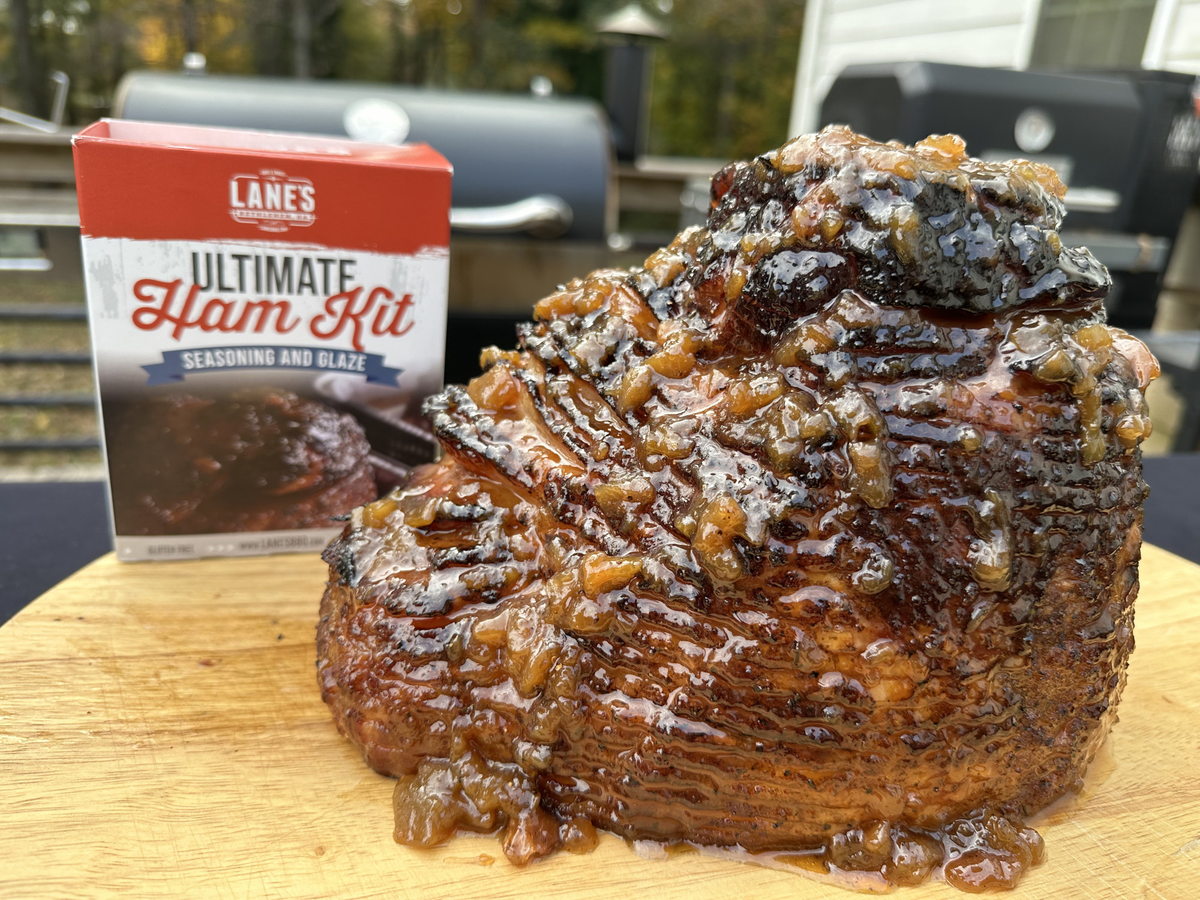
Here at Lane’s BBQ, we love a classic double-smoked ham. It is shockingly simple, frees up precious oven space during a holiday feast, and adds a layer of real wood-smoked flavor that the little glaze packet in the box never saw coming.
A double-smoked ham is a fully cooked ham that gets warmed on the smoker with seasoning, another round of smoke, and a sticky glaze. The key words are fully cooked. This guide is built for a ready-to-eat spiral-cut or boneless ham, not a fresh raw ham or one labeled “cook before eating.” Check the package before you light the smoker, and the rest is a very manageable path to holiday hero status.
What You’ll Need
What Is a Double-Smoked Ham?
A double-smoked ham starts with a cured, smoked, fully cooked ham from the store. You warm it on a smoker or grill, adding another layer of smoke along with seasoning and glaze. You are not cooking raw pork from scratch. You are reheating a ready-to-eat ham while adding flavor and creating a sticky exterior.
That distinction matters because hams can be sold fully cooked, partially cooked, or uncooked. A fully cooked ham packaged at a USDA-inspected plant can be reheated to 140°F. A ham labeled “cook before eating” or a fresh uncooked ham must reach 145°F and rest for at least 3 minutes. Other precooked hams may require reheating to 165°F. Always follow the package label if its instructions are more specific.
Quick Answer
Can you smoke an already cooked ham? Yes. That is exactly what a double-smoked ham is. Keep the smoker at 275°F, add seasoning and smoke, glaze near the end, and reheat a USDA-inspected fully cooked ham to 140°F.
Choosing the Best Ham for Double Smoking
The original Lane’s method recommends a fully cooked spiral-cut or boneless ham. Both are easy to find, easy to season, and much faster than smoking a fresh ham.
Spiral-Cut Ham
The slices allow seasoning, smoke, and glaze to reach beyond the surface. Handle it gently because the edges can dry out if overcooked.
Boneless Ham
Uniform shape makes it simple to heat and carve. It is a dependable choice when clean slices and easy serving matter most.
Fresh or Cook-Before-Eating Ham
These are not interchangeable with a ready-to-eat ham. They need different timing, preparation, and safe-temperature guidance.
How Much Ham Per Person?
The original guide uses a simple rule of ½ pound per person. That gives everyone a satisfying serving and usually leaves enough for a next-day sandwich, which may be the finest reward for surviving a holiday gathering.
- 6 people: About 3–4 pounds
- 10 people: About 5–6 pounds
- 14 people: About 7–8 pounds
- 20 people: About 10–12 pounds
How to Prepare a Ham for the Smoker
- Read the label. Confirm that the ham says fully cooked or ready to eat. Note any package-specific reheating instructions.
- Remove all packaging. Discard plastic, netting, pads, and the small glaze packet. The original Lane’s article suggests saving that packet for glazed nuts if you hate wasting things, but the ham deserves a better plan.
- Pat the surface dry. Removing excess moisture helps the binder and seasoning stay in place.
- Apply a light binder. Use duck fat spray or a thin coating of neutral cooking oil. You need enough to hold the seasoning, not enough to give the ham a spa treatment.
- Season the outside. Apply Sweet Heat Rub or Apple Pie Rub. On a spiral ham, gently work a little seasoning between several slices without pulling the ham apart.
- Place it in a shallow pan. Set the ham cut side down. The pan catches juices and glaze while making the ham easier to move.
Make It Easy
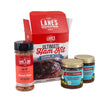
The Lane’s Ham Seasoning & Glaze Kit brings together the seasoning and glaze components for this style of ham. It is especially handy when the rest of the holiday meal already has fourteen moving parts and somebody keeps opening the oven.
Best Wood for Smoking Ham
Ham is already smoked, so the goal is to add a clean supporting layer instead of burying it under heavy smoke. The original guide recommends hickory, oak, cherry, apple, and pecan.
Apple or Cherry
Mild, slightly sweet smoke that pairs naturally with brown sugar, fruit glaze, and holiday ham.
Pecan
Richer than fruitwood but still rounded and approachable. A strong middle-ground choice.
Hickory or Oak
More traditional and savory. Use a clean, moderate amount of smoke so it does not overpower the cured ham.
Pellet blends are perfectly fine. You do not need to track down a mystical single-species tree before dinner can happen. Clean smoke and steady heat matter more than wood-snob credentials.
How to Smoke a Fully Cooked Ham Step by Step
- Preheat the smoker to 275°F. Set up a charcoal or gas grill for indirect cooking. Make sure the ham will not sit directly over active flames.
- Prepare and season the ham. Confirm it is fully cooked, remove the packaging, apply a light binder, and season the exterior.
- Place the ham cut side down. Put it in a shallow pan and position it in the center of the cooking area away from direct heat.
- Insert a thermometer probe. Place it in the thickest part without touching the bone or pushing it into the space between spiral slices.
- Smoke with the lid closed. Let the ham warm and absorb smoke until the internal temperature reaches approximately 120–125°F.
- Prepare the glaze. Melt the butter and brown sugar, then stir in the Salted Caramel Peach Spread until smooth.
- Glaze the ham. Brush or spoon the glaze over the top and sides, letting some work between the spiral slices.
- Continue smoking. Cook until the glaze becomes darker and sticky and a USDA-inspected fully cooked ham reaches 140°F.
- Rest before serving. Remove it from the smoker, tent loosely with foil, and rest for 15–20 minutes.
Keep the smoker closed as much as possible. Every peek releases heat, extends the cook, and confirms that yes, the ham is still there.
Lane’s Salted Caramel Peach Ham Glaze
The original article’s glaze is rich, sticky, and built for the sweet-and-savory personality of holiday ham.
Glaze Ingredients
- 1 stick butter
- ½ cup brown sugar
- 1–2 jars Unicoi Salted Caramel Peach Spread
How to Make It
- Melt the butter in a small saucepan over medium-low heat.
- Add the brown sugar and stir until dissolved and smooth.
- Stir in 1 jar of Salted Caramel Peach Spread. Add more if you need extra glaze for a larger ham or want a stronger peach flavor.
- Keep the glaze warm over low heat, stirring occasionally.
- Apply it when the ham reaches about 120–125°F, then continue smoking until the glaze is sticky and the ham reaches its target temperature.
The original method added the glaze after the ham reached 140°F and cooked it for another 10–20 minutes. Applying it earlier gives the glaze time to set while allowing you to remove the ham at the proper finish temperature. Sticky is good. Dry is not an additional flavor profile.
What Internal Temperature Should Smoked Ham Reach?
USDA-Inspected Fully Cooked Ham
Reheat to 140°F. Remove it promptly so the spiral edges remain moist.
Other Precooked Ham
Reheat to 165°F when it was not packaged in a USDA-inspected plant or the label directs you to do so.
Raw or Cook-Before-Eating Ham
Cook to 145°F and rest for at least 3 minutes. Follow its package directions and a recipe written for uncooked ham.
Check the thickest section in more than one place with an instant-read thermometer before removing the ham. Avoid the bone and spaces between spiral slices because they can give misleading readings.
How Long Does It Take to Smoke a Ham at 275°F?
A fully cooked ham commonly needs about 15–20 minutes per pound at 275°F, but this is planning guidance, not a finish line. Shape, starting temperature, bone, smoker recovery, outdoor weather, and how often the lid opens can all change the actual time.
4–5 Pound Ham
Begin checking around 1¼ hours. A typical cook may take approximately 1½–2 hours.
6–8 Pound Ham
Begin checking around 1¾ hours. A typical cook may take approximately 2–2½ hours.
9–10 Pound Ham
Begin checking around 2¼ hours. A typical cook may take approximately 2½–3½ hours.
The original article estimated 1–2 hours, which can be accurate for smaller hams. Larger spiral hams often need more breathing room in the schedule. Build in extra time and use the thermometer instead of making hungry people negotiate with the clock.
How Long to Rest and How to Slice Smoked Ham
Rest the finished ham for 15–20 minutes under a loose foil tent. This makes it easier to handle and gives the juices a chance to settle before slicing.
Spiral-Cut Ham
Run a knife around the center bone, then release sections of the pre-cut slices. Transfer them to a warm platter and spoon a little pan glaze over the top.
Boneless Ham
Place the ham on a stable cutting board and slice across it to your preferred thickness. Thin slices work well for sandwiches, while thicker slices hold heat better on a holiday plate.
Do not leave cooked ham at room temperature for more than 2 hours, or more than 1 hour when the temperature is above 90°F. Refrigerate leftovers in shallow containers.
Common Double-Smoked Ham Problems
The Ham Is Dry
It likely cooked past its target temperature or stayed exposed too long. Use a probe, glaze before the finish, and remove a USDA-inspected fully cooked ham at 140°F.
The Spiral Slices Are Separating
Handle the ham gently, keep it cut side down, and avoid forcing seasoning deeply between every slice.
The Glaze Is Burning
The heat is too high or the ham is too close to direct flame. Move it to indirect heat and apply thick sugary glaze only near the end.
The Ham Is Too Smoky
Remember that it was already smoked once. Use clean, light smoke and favor apple, cherry, or a mild pellet blend.
The Ham Is Heating Unevenly
Rotate the pan if your cooker has a hot spot and verify the temperature in multiple thick areas.
The Glaze Slides Off
Pat the ham dry before seasoning and let its surface warm before glazing. Apply the glaze in two thinner coats instead of one landslide.
More Lane’s Smoked Ham Recipes
Once you have the double-smoked method down, you can take the ham in several directions without reinventing the entire holiday.
Apple Pie Double-Smoked Ham
A warm, sweet holiday ham built around Lane’s Apple Pie Rub.
Salted Caramel Peach Double-Smoked Ham
The complete recipe behind the butter, brown sugar, and peach-spread glaze in this guide.
Carolina Mustard Double-Smoked Ham
A tangy alternative when you want the ham to lean savory instead of dessert-adjacent.
Ham Burnt Ends
Smoky, sticky cubes that make a strong argument for buying extra ham on purpose.
Frequently Asked Questions About Smoking Ham
Can you smoke an already cooked ham?
Yes. A double-smoked ham starts with a fully cooked, ready-to-eat ham and reheats it on the smoker with seasoning, additional smoke, and glaze.
What is the best ham to smoke?
A fully cooked spiral-cut or boneless ham is best for this method. Check the package to confirm that it is ready to eat rather than raw or labeled “cook before eating.”
What temperature should I set the smoker for ham?
Set the smoker or indirect grill to 275°F. This temperature warms the ham efficiently while giving it time to absorb smoke and set the glaze.
What internal temperature should double-smoked ham reach?
Reheat a fully cooked ham packaged at a USDA-inspected plant to 140°F. Other precooked hams may need to reach 165°F, while raw or cook-before-eating ham must reach 145°F and rest for at least 3 minutes. Always check the label.
How long does it take to smoke a fully cooked ham at 275°F?
Plan on approximately 15–20 minutes per pound, although ham shape, starting temperature, smoker performance, and weather affect the timing. Use internal temperature to determine when it is ready.
What wood is best for smoking ham?
Apple, cherry, pecan, hickory, and oak all pair well with ham. Apple and cherry provide mild, slightly sweet smoke, while hickory and oak deliver a stronger traditional barbecue flavor.
When should I glaze a smoked ham?
Apply the glaze when the ham reaches approximately 120–125°F, then continue smoking until the glaze is sticky and the ham reaches its proper finish temperature.
How much ham should I buy per person?
Plan on approximately ½ pound of ham per person. This allows for a generous serving and usually provides some leftovers.
How long should smoked ham rest before slicing?
Rest the ham for 15–20 minutes under a loose foil tent. This makes it easier to handle and gives the juices time to settle before slicing.
Free the Oven and Bring Home the Ham
Double-smoking a fully cooked ham is one of the easiest ways to add real barbecue flavor to a holiday meal without creating another all-day project. Choose the right ham, smoke it gently at 275°F, glaze before it reaches the finish line, and trust the thermometer.
The oven stays available, the ham gets sticky around the edges, and you get to carry it to the table like this was all much harder than it actually was. We will keep that last part between us. Happy smoking!


Leave a comment
All comments are moderated before being published.
This site is protected by hCaptcha and the hCaptcha Privacy Policy and Terms of Service apply.