


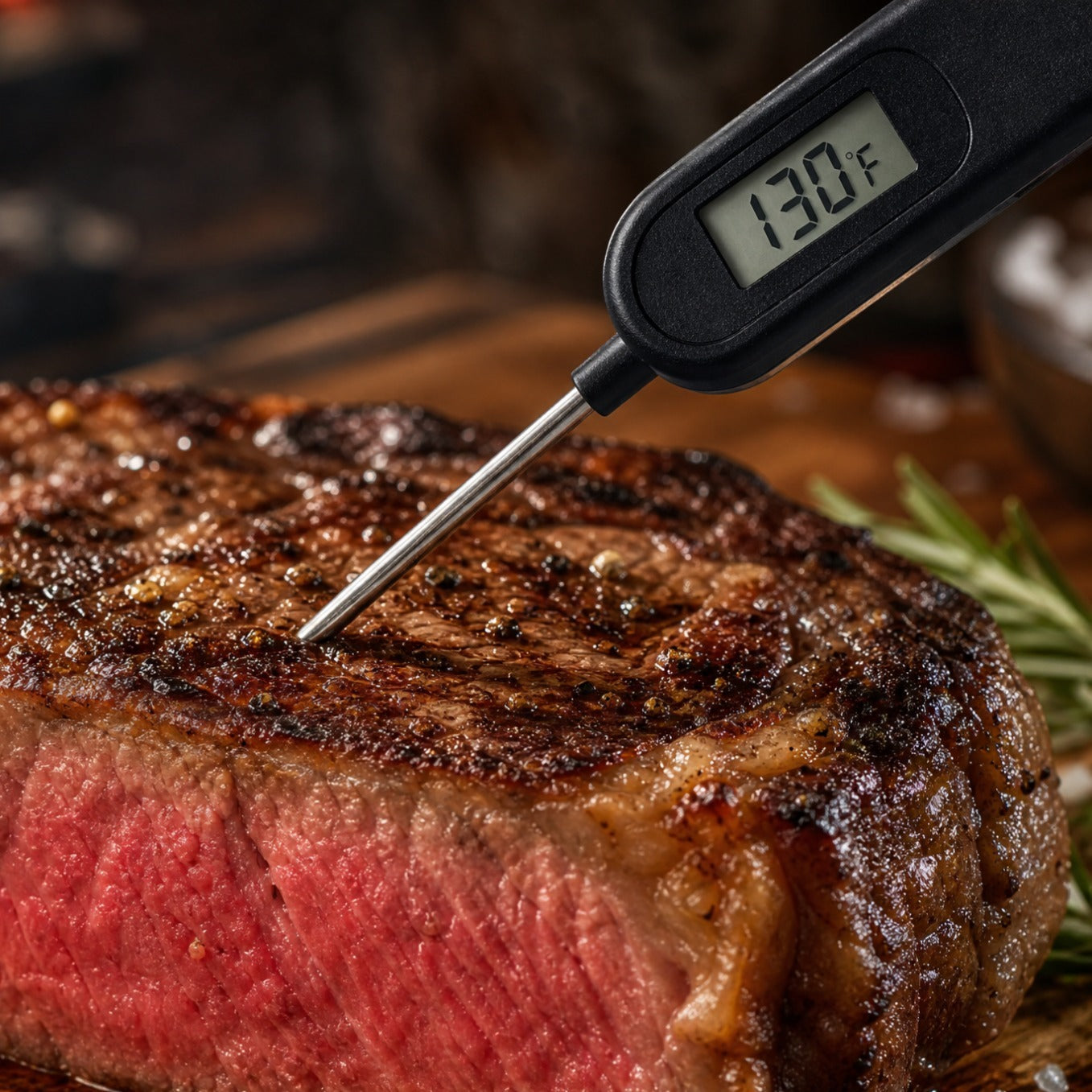
You can eyeball a lot of things in the kitchen. A pinch of salt. A splash of sauce. Whether one more rib will fit on your plate. Meat temperature should not be one of them.
Knowing the right internal temperature takes the guesswork out of grilling, smoking, roasting, and cooking dinner. It helps you avoid dry chicken, tough pork, undercooked burgers, and the heartbreak of slicing into a brisket before it is ready.
This guide covers Lane's recommended temperatures for chicken, beef, pork, turkey, seafood, and smoked meats. It also explains where to place your thermometer, when to pull meat from the heat, and why a safe temperature is not always the same thing as the best temperature for tenderness.
What You'll Need
Quick Meat Temperature Chart
Need the number without the life story? Start here. These temperatures combine the Lane's Meat Temperature Guide Magnet with additional guidance for ground meat, turkey, leftovers, and individual pork cuts.
| Meat or Cut | Target Temperature | What to Know |
|---|---|---|
| Chicken breast and white meat | 165°F | Check the thickest part without touching bone. |
| Chicken thighs and dark meat | 175°F | Poultry is safe at 165°F, but Lane's recommends 175°F for a more tender dark-meat texture. |
| Turkey breast | 165°F | Check the thickest part of the breast and allow it to rest before slicing. |
| Turkey thighs and legs | 175°F | Dark turkey meat benefits from the same higher finishing temperature as chicken thighs. |
| Steak, rare | 125°F | Cool red center. This is a doneness preference below the federal safe-minimum recommendation. |
| Steak, medium rare | 135°F | Warm red center. This is a doneness preference below the federal safe-minimum recommendation. |
| Steak, medium | 145°F | Warm pink center. Allow whole cuts of beef to rest for at least three minutes. |
| Steak, medium well | 155°F | Slight pink remaining in the center. |
| Ground beef and burgers | 160°F | Ground beef follows different food-safety guidance than a whole steak. |
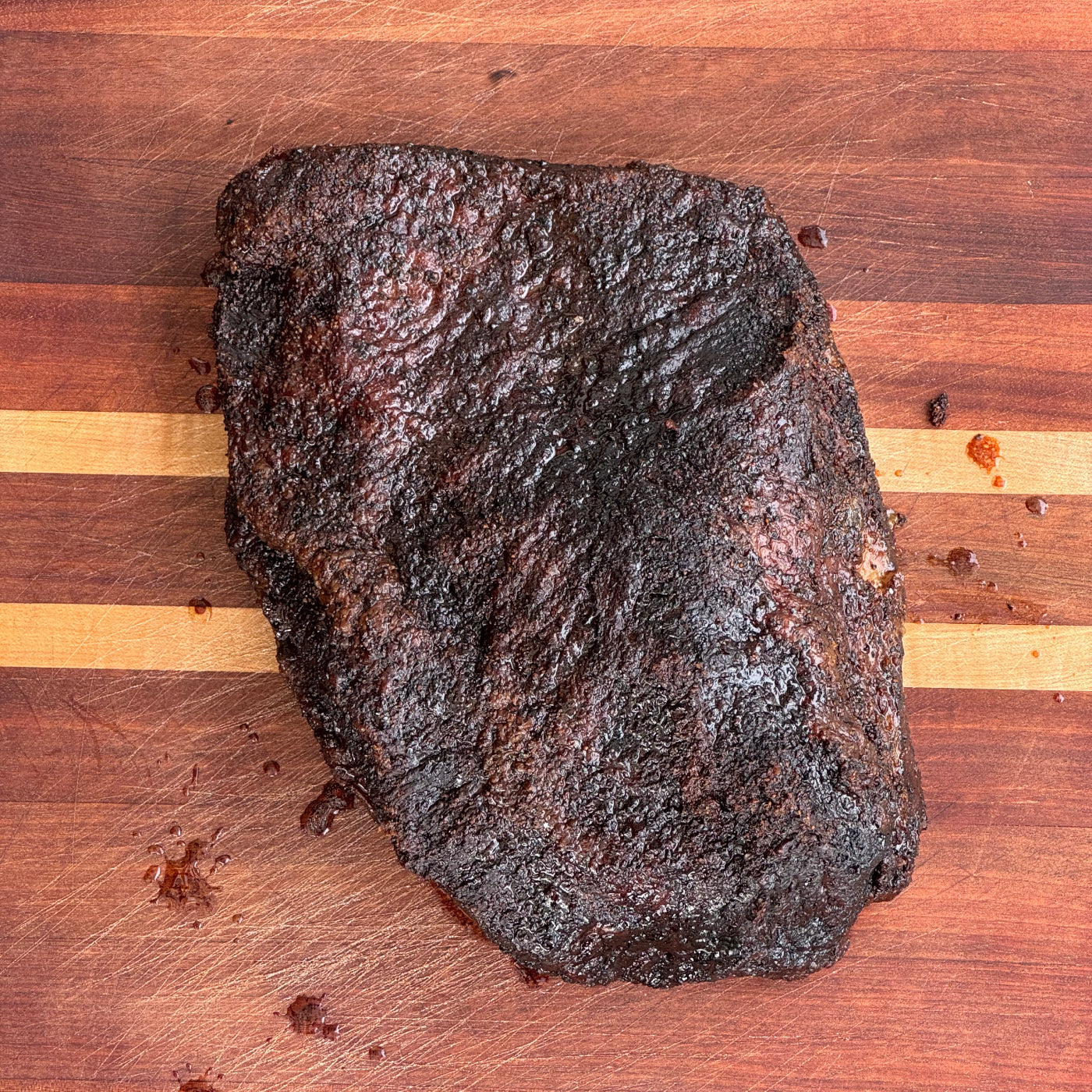
| Brisket | Around 202°F | Temperature gets you close. Probe tenderness tells you when it is truly ready. |
| Pork chops, loin, tenderloin and roasts | 145°F | Allow whole pork cuts to rest for at least three minutes. |
| Ground pork and fresh pork sausage | 160°F | Ground pork is different from a whole pork chop or tenderloin. |
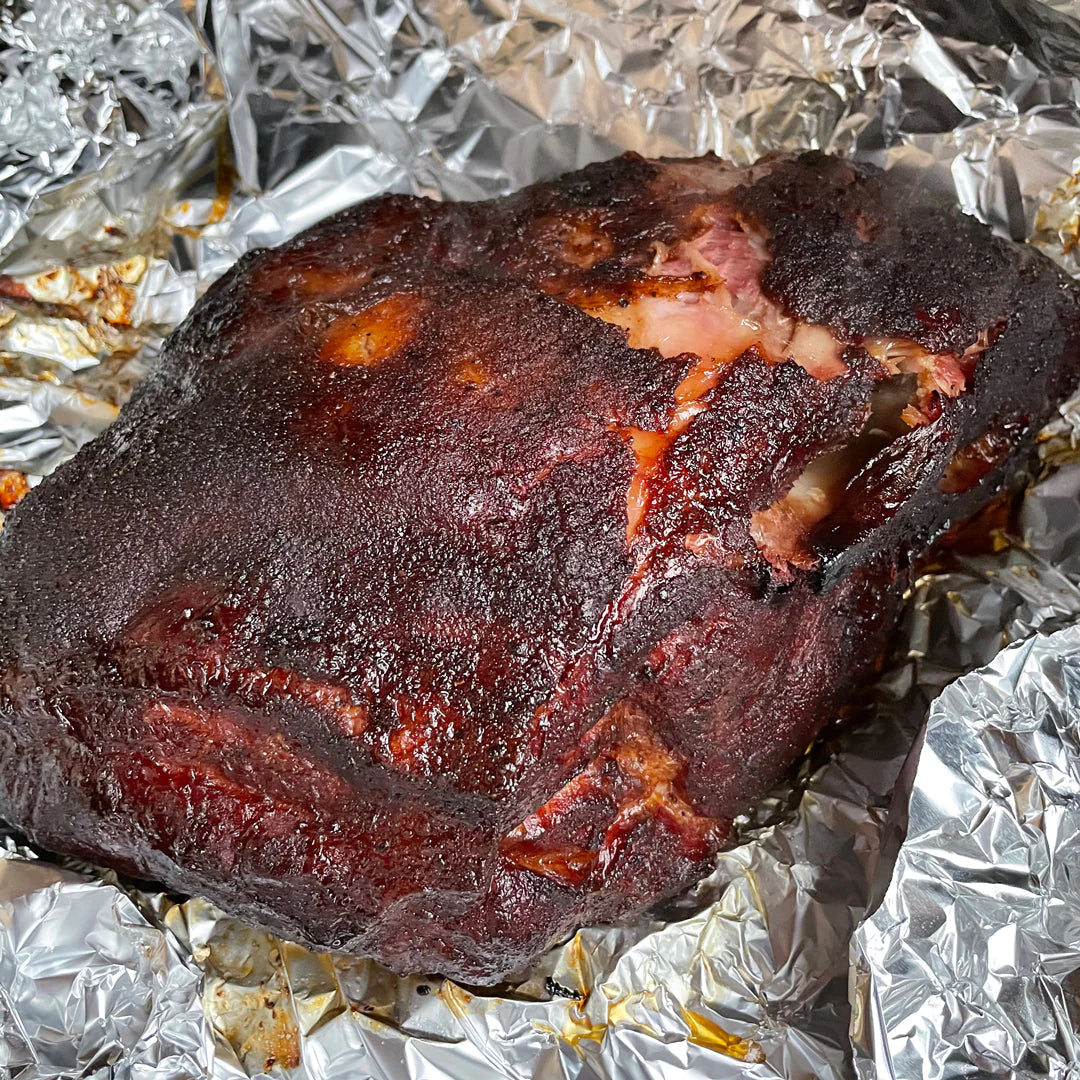
| Pulled pork and pork butt | Around 202°F | The meat should feel tender and the bone should loosen easily. |
| Fish | 145°F | Check the thickest portion of the fillet. |
| Shrimp, lobster, crab and scallops | Opaque and fully cooked | The flesh should appear pearly or white and opaque. |
| Leftovers and casseroles | 165°F | Check the center or thickest area before serving. |
A quick food-safety note: Lane's steak temperatures include common doneness preferences. Federal guidance recommends cooking whole cuts of beef, pork, lamb, and veal to at least 145°F followed by a three-minute rest. Ground beef and pork should reach 160°F, and poultry should reach 165°F.
Keep the Temperatures Where You Can See Them
Searching for a temperature with raw chicken on your hands is not a great system.
The Lane's Meat Temperature Guide Magnet keeps our most-used cooking temperatures on your refrigerator, grill, smoker, outdoor kitchen, or toolbox for quick reference.
Safe Temperature vs. the Best Finished Temperature
One of the most confusing parts of cooking meat is that “safe to eat” and “ready to serve” do not always mean the same thing.
Chicken breast
At 165°F, chicken breast has reached its safe minimum temperature. Cooking it much farther can quickly dry it out.
Pork chop
A pork chop can be juicy, tender, and safely cooked at 145°F after an appropriate rest.
Pork butt
Pork butt is cooked much hotter so its connective tissue breaks down and the meat becomes tender enough to pull.
Brisket and pork butt are not cooked to around 202°F because they are unsafe below that temperature. They are cooked that high because they are tough, hardworking cuts filled with connective tissue.
Time and heat gradually turn that connective tissue into the soft, tender texture we want. That is why a pork chop can be ready at 145°F while a pork butt at the same temperature would put up a fight with your fork.
Beef Internal Temperature Guide
Beef temperatures depend heavily on the cut. A steak is usually cooked to a preferred level of doneness, ground beef must reach a safe minimum, and tough cuts like brisket need considerably more heat and time to become tender.
Steak Doneness Temperatures
Rare
A cool red center with a very soft texture.
Medium rare
A warm red center with a juicy, tender texture.
Medium
A warm pink center with a firmer texture.
Medium well
A mostly brown center with a small amount of pink remaining.
Lane's tip: For a thicker steak, consider removing it from the heat a few degrees before your desired final temperature. It will usually continue rising as it rests. Carryover varies, though, so keep the thermometer nearby instead of betting dinner on one universal five-degree rule.
Ground Beef and Burgers
Ground beef should reach an internal temperature of 160°F. Do not judge a burger by its exterior color or grill marks. A burger can look plenty done on the outside while the center is still below its safe temperature.
Beef Roasts and Whole Cuts
Whole beef steaks, chops, and roasts should reach at least 145°F followed by a three-minute rest under federal food-safety guidance.
Keep learning
Want the full process from seasoning to resting? Read our guide to grilling the perfect steak.
What Temperature Is Brisket Done?
Lane's uses 202°F as the main target for brisket, but brisket has never been especially interested in following rules.
Some briskets may feel ready a few degrees earlier. Others may need to move closer to 205°F. Start checking the flat as the brisket reaches the upper 190s.
Temperature Gets You Close. Feel Gives You the Answer.
Slide a temperature probe into several areas of the brisket flat. When the probe goes in with very little resistance, almost like pushing it into softened butter, the brisket is ready.
If the probe still meets resistance, keep cooking. Do not pull a tough brisket just because the display hit one exact number.
Wrap range
Lane's typically wraps after the stall once the bark is set.
Finish target
Begin checking for tenderness before blindly chasing the top of the range.
Resting Brisket
A long rest is part of the brisket cook, not an optional intermission. Keep it wrapped and allow it to rest for at least two hours before slicing. That rest gives the meat time to settle and helps keep more moisture in every slice.
Lane's brisket guide
Get the complete process in our step-by-step guide to smoking a brisket.
Pork Internal Temperature Guide
Pork does not need to be cooked until it is dry, gray, and capable of doubling as a coaster.
Whole pork cuts such as chops, tenderloin, loin, and roasts can be cooked to 145°F followed by a three-minute rest. Ground pork and fresh pork sausage should reach 160°F.
Pork chops
Check the thickest portion and allow the chop to rest before serving.
Pork tenderloin
A properly cooked pork tenderloin may still have a slight blush of pink in the center.
Pork loin and roasts
Rest larger cuts before slicing so the juices have time to settle.
Ground pork and sausage
Ground pork follows different safety guidance than whole pork cuts.
What Temperature Is Pulled Pork Done?
Lane's targets around 202°F for pork butt and pulled pork. As with brisket, tenderness matters more than landing on a perfect number.
The temperature probe should slide into the meat with little resistance. On a bone-in pork butt, the shoulder bone should loosen and pull away cleanly without bringing half the roast along for the ride.
What About Pork Ribs?
Ribs can be difficult to check with a thermometer because the meat is thin and surrounded by bones. Temperature can be useful, but tenderness tests are often more practical.
The rack should bend easily when lifted from the center, the surface should begin to crack slightly, and the meat should have pulled back from the ends of the bones. You want tender ribs with a clean bite, not meat that gives up and falls apart when somebody looks at it.
Lane's pork guides
Chicken Internal Temperature Guide
Chicken white meat and dark meat are safe at the same minimum temperature, but they do not always taste their best at the same finishing temperature.
White meat
Chicken breasts and other white meat should reach 165°F at the thickest point.
Dark meat
Lane's recommends 175°F for thighs and legs because the additional heat helps soften connective tissue and improve the texture.
Chicken Breast
Check the thickest portion of the breast without touching bone. Once the coolest part has reached 165°F, remove the chicken and let it rest briefly before slicing.
Chicken Thighs and Legs
Chicken thighs are safe at 165°F, but they usually become more tender and enjoyable around 175°F. Dark meat contains more fat and connective tissue than breast meat, so it handles the extra heat much better.
Chicken Wings
Wings must reach at least 165°F. Many cooks take them higher to render more fat and help the skin become crisp. With wings, safe temperature is the starting line. Crisp skin is the actual assignment.
Whole Chicken
Check more than one location. Measure the thickest part of the breast and the innermost portion of the thigh without touching bone. The breast must reach 165°F, while the thighs can continue toward the Lane's dark-meat target of 175°F.
Turkey Internal Temperature Guide
Turkey follows the same poultry safety guidance as chicken. The challenge is getting the breast and dark meat to finish properly without drying out one while waiting on the other.
Turkey breast
Check the thickest portion of the breast from more than one angle.
Turkey thighs and legs
Dark meat benefits from a higher finish for a softer, more tender texture.
Where to Check a Whole Turkey
- Insert the thermometer into the thickest part of the breast.
- Check the innermost part of the thigh near the body.
- Avoid touching bone with the thermometer tip.
- Check both sides of a large bird instead of trusting one reading.
- If the turkey is stuffed, the center of the stuffing must also reach 165°F.
Let the Turkey Rest
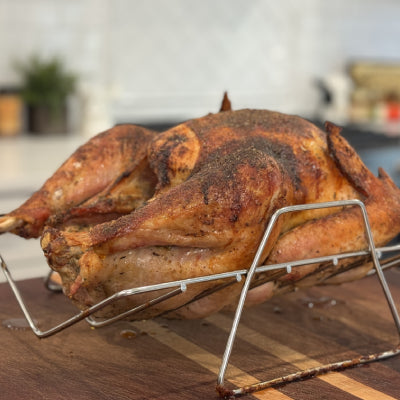
Rest the turkey before carving. A larger bird needs more time than a chicken breast or pork chop. Resting gives the juices time to redistribute and makes the bird easier to carve without flooding the cutting board.
Lane's turkey guide
Preparing a holiday bird? Follow our full guide to cooking a turkey in the oven.
Fish and Seafood Internal Temperatures
Fish
Check the center of the thickest part of the fillet.
Shellfish
Shrimp, lobster, crab, and scallops should appear pearly or white and opaque when cooked.
Fish Fillets and Salmon
Insert the thermometer sideways into the thickest portion whenever possible. This gives the probe more contact with the center of the fillet and usually produces a more reliable reading than pushing straight down through a thin piece of fish.
Shrimp
Properly cooked shrimp should be firm, opaque, and curved. Shrimp that form an extremely tight circle have usually spent a little too long at the party.
Clams, Oysters and Mussels
Cook clams, oysters, and mussels until their shells open. Discard any shells that remain closed after cooking.
Carryover Cooking: Why Temperature Keeps Rising
Meat does not immediately stop cooking when it leaves the grill, smoker, skillet, or oven. Heat stored near the exterior continues moving toward the cooler center during the resting period.
This is called carryover cooking.
Desired final temperature
This is where you want the meat to finish after resting.
Possible pull temperature
A larger cut may continue climbing after it leaves the heat.
Temperature rise
This is an example, not a guarantee for every cut and every cooking method.
Do not blindly subtract five degrees from everything. Carryover depends on the meat's size, thickness, cooking temperature, and resting conditions. A large roast may rise more than a thin steak or chicken breast. Track your own cooks and learn how your equipment behaves.
Where to Place a Meat Thermometer
A thermometer can only tell the truth about the spot where you put it. Measuring the wrong area can give you a beautiful, precise, completely useless number.
Steaks and pork chops
Insert the probe into the center of the thickest area. For thinner cuts, insert it through the side so more of the probe sits inside the meat.
Chicken breast
Check the thickest part of the breast and avoid touching bone or pushing the probe through into the pan or grill grate.
Whole poultry
Check the thickest breast area and the innermost portion of the thigh. Large birds should be checked in several places.
Burgers
Insert the thermometer through the side of the patty into its center. This is especially helpful with thinner burgers.
Brisket
Check the thickest portion of the flat. Test several areas when checking for probe tenderness.
Pork butt
Place the probe deep in the thickest portion without touching the shoulder bone.
Fish fillets
Insert the thermometer into the thickest portion. Enter from the side when the fillet is too thin for a reliable top-down reading.
Roasts
Aim for the center of the thickest section and stay away from bones, large pockets of fat, and the cooking pan.
How to Check Temperature Correctly
- Find the thickest portion. The thickest area is often the last part to reach temperature.
- Avoid bones and large pockets of fat. They conduct heat differently and can give you a misleading reading.
- Check more than one spot. Large cuts and whole birds rarely cook at exactly the same rate from end to end.
- Wait for the reading to settle. Give the thermometer enough time to produce its final reading.
- Clean the probe. Wash or sanitize it between raw and cooked foods to prevent cross-contamination.
Your Thermometer Gives You the Number
The Lane's Meat Temperature Guide Magnet reminds you what that number should be.
Keep it beside the grill or on the refrigerator so the answer is always within reach.
Common Meat Temperature Mistakes
Guessing by color
Brown meat is not automatically safe meat. Color and grill marks are not reliable substitutes for an internal temperature reading.
Touching bone
Bone can conduct heat differently than the surrounding meat and give you an inaccurate reading.
Checking only one location
Large cuts and whole birds can have hot and cool spots. Check several areas before calling the cook finished.
Slicing immediately
Resting is part of the cooking process. Cutting too soon can send juices across the cutting board instead of keeping them in the meat.
Treating 202°F like a magic button
Brisket and pork butt still need to feel tender. A temperature is a checkpoint, not permission to ignore what the probe is telling you.
Opening the cooker constantly
Every peek releases heat and can stretch out the cook. Use a leave-in probe when practical and let the cooker do its job.
Meat Temperature FAQs
What is the safest internal temperature for meat?
The safe temperature depends on the type of meat. Whole cuts of beef, pork, lamb, and veal should reach at least 145°F followed by a three-minute rest. Ground beef and pork should reach 160°F. Poultry should reach 165°F, and fish should reach 145°F.
What temperature should chicken breast reach?
Chicken breast and other poultry white meat should reach an internal temperature of 165°F. Check the thickest portion without touching bone.
Why does Lane's recommend 175°F for chicken thighs?
Chicken thighs are safe at 165°F, but dark meat contains more fat and connective tissue than breast meat. Cooking thighs and legs to around 175°F usually produces a softer, more tender texture.
Is pork safe to eat at 145°F?
Whole pork cuts such as chops, tenderloin, loin, and roasts can be safely cooked to 145°F followed by at least a three-minute rest. Ground pork and fresh pork sausage should reach 160°F.
Can properly cooked pork still be pink?
Yes. A whole pork cut that has reached 145°F and rested properly may still have a slight amount of pink. Color alone does not determine whether meat has reached a safe temperature.
What temperature is pulled pork done?
Lane's targets around 202°F for pulled pork. Begin checking for tenderness as the pork moves through the upper 190s. The probe should slide in easily, and a bone-in pork butt should release its shoulder bone with little resistance.
What temperature is brisket done?
Lane's uses approximately 202°F as the brisket target, with a common finishing range of roughly 202°F to 205°F. However, brisket is finished when a probe slides into the flat with very little resistance. Temperature gets you into the neighborhood. Tenderness tells you when you have reached the right house.
Does meat continue cooking while it rests?
Yes. Heat stored near the exterior continues moving toward the center after meat leaves the cooker. This is called carryover cooking. The amount of temperature rise depends on the size, thickness, cooking method, and resting conditions.
Where should I insert a meat thermometer?
Insert the thermometer into the thickest portion of the meat and avoid bone, large pockets of fat, and the cooking surface. Check several locations on large cuts and whole poultry.
Can I tell if meat is done by looking at it?
No. Exterior color, grill marks, firmness, and clear juices are not reliable ways to confirm that food has reached a safe internal temperature. Use a food thermometer.
What temperature should leftovers reach?
Reheat leftovers and casseroles to an internal temperature of 165°F. Check the center or thickest portion before serving.
Food-safety temperatures in this guide are based on current guidance from the USDA Food Safety and Inspection Service. Lane's higher finishing temperatures for dark poultry meat, brisket, and pulled pork are cooking recommendations intended to improve tenderness and texture.
Great Barbecue Should Not Depend on Guesswork
Know the number, check the right spot, and give the meat time to rest. That little bit of confidence makes everything from Tuesday-night chicken to an all-day brisket cook a whole lot easier.
Keep Lane's recommended temperatures within arm's reach with the Meat Temperature Guide Magnet.


Leave a comment
All comments are moderated before being published.
This site is protected by hCaptcha and the hCaptcha Privacy Policy and Terms of Service apply.