







How to Spatchcock Chicken
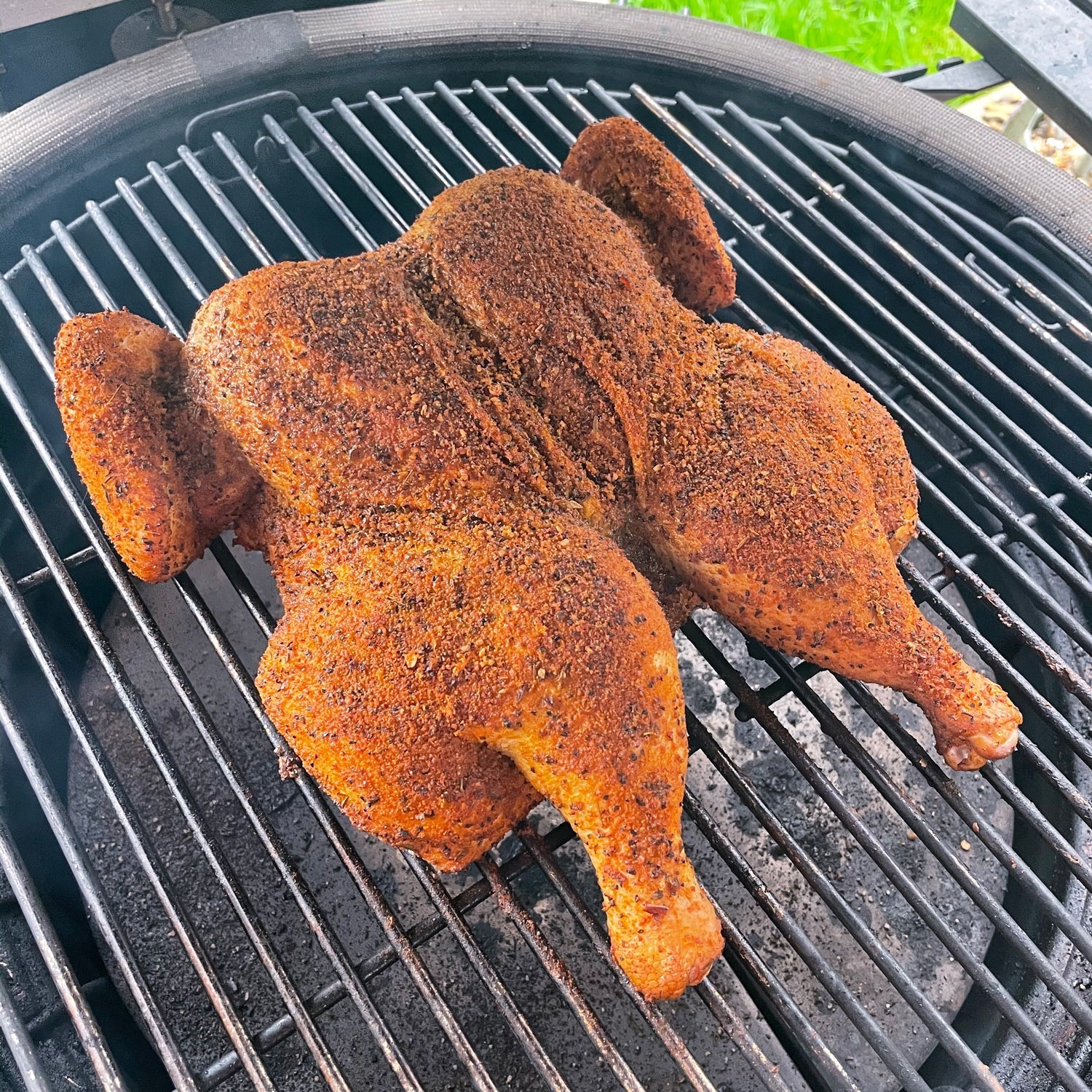
Spatchcock chicken is a simple technique where the backbone is removed and the bird is flattened before cooking. You may also hear it called butterflying. The flatter shape helps the white and dark meat cook more evenly, shortens the cook, and gives more of the skin direct exposure to the heat—meaning juicy chicken with plenty of crispy skin.
You can roast, grill, or smoke a spatchcock chicken, then season it just about any way you like. Around here, we usually head for the smoker. That gives you time to enjoy a beverage, work on the sides, and let the cooker do its thing.
What You'll Need
Why Spatchcock a Chicken?
Roasting a whole bird can be a lengthy process. It can also be tricky to get the breast and thighs done at the same time without drying something out. Spatchcocking solves a lot of that by flattening the chicken into one more even layer.
Faster Cooking
A flattened chicken cooks much quicker than a whole upright bird and can cut the total cooking time nearly in half.
More Even Doneness
The breast and thighs sit closer to the same level, giving you better control over both white and dark meat.
Crispier Skin
More skin faces the heat directly, which helps it render and crisp instead of steaming around the sides of the bird.
Faster, juicier, and crispier just seems like an easy yes, yes, and yes.
How to Spatchcock a Chicken
- Set the chicken breast-side down. Place the chicken on a stable cutting board with the backbone facing up. Point the legs toward you if that feels most comfortable.
- Remove the backbone. Starting at either the neck or tail, use sharp kitchen shears to cut down one side of the backbone. Then cut down the other side and remove it. You will hear some cracking and popping. That is normal.
- Open the chicken. Spread the chicken apart so the inside of the bird is fully exposed.
- Flatten the breastbone. Flip the bird over so the breast faces up. Place the heel of your hand over the center of the breast and press down firmly until you feel the breastbone crack and the chicken lies flat.
- Position the legs and wings. Angle the legs inward and tuck the wing tips behind the shoulders so they do not burn.
- Pat the chicken dry. Use paper towels to remove surface moisture before seasoning. Do not rinse raw chicken, since splashing water can spread bacteria around the kitchen.
Save the backbone. Freeze it with other poultry bones and scraps, then use it to make homemade chicken stock or broth. See our stock and broth guide for the full method.
Using a Knife Instead of Shears
Kitchen shears are the easiest and safest option for most home cooks, but you can use a sharp boning knife if you are comfortable with it. Cut closely along each side of the backbone. For a more advanced trim, follow the rib cage with the knife and remove the ribs along with the spine. Always cut away from your hands and keep the chicken steady on the board.
How to Season Spatchcock Chicken
Once the chicken is flattened, carefully loosen the skin over the breasts and thighs with your fingers. Add a little seasoning and, if you like, a thin pat of butter beneath the skin. Then season the outside of the skin and the underside of the bird.
We love Lane's Spellbound Rub or Lane's Signature Rub for this cook. Spellbound brings a sweet and smoky BBQ flavor, while Signature gives you a savory, all-purpose profile that works with just about any side dish.
Season Under the Skin
Seasoning under the skin gets flavor directly onto the meat instead of leaving all the good stuff on the outside.
Season Both Sides
Do not forget the underside. A light, even coating across the entire bird gives you better flavor in every bite.
Check the label first. If the chicken says it is enhanced, injected, or contains a salt solution, season more lightly. That bird is already carrying extra salt.
How to Cook a Spatchcock Chicken
Spatchcock chicken works on a smoker, charcoal grill, gas grill, or in the oven. No matter which method you choose, cook it breast-side up and use a thermometer instead of relying only on the clock.
Smoker
Preheat the smoker to 275–325°F and place the chicken breast-side up over indirect heat. Smoke until the thickest part of the breast and the innermost thigh both reach at least 165°F.
Charcoal or Gas Grill
Set up a two-zone fire. Place the chicken on the indirect side with the legs angled toward the hotter area. Close the lid and cook until it reaches temperature.
Oven
Place the chicken on a rack over a sheet pan and roast at 375–425°F. The higher end of that range helps the skin brown and crisp.
For smoke flavor, lighter fruit woods such as apple or cherry work especially well with chicken. Pecan is another good choice when you want a slightly richer smoke without overpowering the bird.
Spatchcock Chicken Times and Temperatures
Cook time changes with the size of the chicken, cooker temperature, weather, and how often you open the lid. Use these times as planning estimates, then let the thermometer make the final call.
| Method | Cooking Temp | Chicken Weight | Estimated Time | Internal Temp |
|---|---|---|---|---|
| Smoke | 275°F | 3.5–4 lbs | About 60 minutes | 165°F minimum |
| Smoke | 275°F | 4.5–5 lbs | About 75–90 minutes | 165°F minimum |
| Roast | 375°F | 3.5–4 lbs | About 45 minutes | 165°F minimum |
| Roast | 375°F | 4.5–5 lbs | About 50–60 minutes | 165°F minimum |
Check the temperature in the thickest part of the breast and in the innermost part of the thigh without touching bone. Every part of the chicken should reach at least 165°F. Many people prefer the thighs closer to 170–175°F because the dark meat becomes more tender at the higher temperature.
How to Get Crispy Skin
Dry the Surface
Moisture is the enemy of crispy skin. Pat the bird thoroughly dry before seasoning. For even better results, leave it uncovered in the refrigerator for several hours or overnight.
Use Enough Heat
Chicken skin renders better at 300°F and above. If you smoke at 275°F, finish with a short burst of higher heat once the meat is nearly done.
Cook Skin-Side Up
Keeping the skin facing up lets fat render away while protecting the breast from the hottest part of the fire.
Do Not Overdo the Butter
A little butter under the skin adds richness. Too much on top can soften the skin and make it harder to crisp.
Common Spatchcock Chicken Mistakes
Dull shears slip and make the backbone much harder to remove. Use a sturdy, sharp pair and work slowly.
The chicken should lie flat. If the center is still raised, press firmly over the breastbone until it cracks.
Chicken size and cooker temperature vary. Always verify doneness with a meat thermometer.
Bone can give you a misleading reading. Insert the thermometer into the thickest meat without touching bone.
Chicken takes on smoke quickly. Aim for clean, light smoke instead of thick white clouds.
Let the chicken rest for 10–15 minutes so the juices have time to settle back into the meat.
Spatchcock Chicken FAQs
Is spatchcocking the same as butterflying a chicken?
Yes. Both terms refer to removing the backbone and flattening the chicken before cooking.
Do I have to remove the breastbone?
No. You only need to press firmly enough to crack or flatten it so the chicken lies evenly on the cooking surface.
Should I rinse the chicken first?
No. Rinsing raw poultry can spread bacteria through splashing. Pat the chicken dry with paper towels, discard them, and clean the work area after handling the bird.
What temperature is spatchcock chicken done?
The thickest part of the breast and the innermost part of the thigh should each reach at least 165°F. Check both areas with a food thermometer.
Can I spatchcock the chicken ahead of time?
Yes. Prepare and season it up to a day ahead, then keep it covered or uncovered on a tray in the refrigerator. Leaving it uncovered helps dry the skin for a crispier finish.
Can I brine a spatchcock chicken?
Absolutely. Wet brining adds moisture and seasoning, while dry brining helps season the meat and dry the skin. Just make sure the chicken is not already enhanced with a salt solution before adding more salt.
What should I do with the backbone?
Save it for stock. Freeze the backbone until you have enough bones and trimmings, then simmer them with vegetables and seasonings for a flavorful homemade base.
Make Your Next Chicken Cook the Lane's Way
Spatchcocking looks impressive, but once you do it one time, you will wonder why you waited so long. Grab a whole chicken, your favorite Lane's seasoning, and get that bird on the smoker, grill, or roasting pan.


1 comment
Mike Bauer
Great Thanks!
Leave a comment
All comments are moderated before being published.
This site is protected by hCaptcha and the hCaptcha Privacy Policy and Terms of Service apply.