






How to Grill a Beef Tenderloin
A whole beef tenderloin is tender, impressive, and expensive enough to make everybody suddenly interested in what the thermometer says. The Lane's method uses a reverse sear: cook the roast gently over indirect heat, rest it while the grill gets blazing hot, then sear every side for a deeply browned crust. It looks like a holiday centerpiece, but the process is mostly temperature control with better lighting.
What You'll Need
Choosing the Right Beef Tenderloin
Beef tenderloin is the long, narrow muscle that gives us filet mignon. It is prized for tenderness, not heavy marbling or massive beef flavor. That makes quality seasoning, careful cooking, and a good crust especially important.
Whole Untrimmed Tenderloin
This may include the chain muscle, silver skin, fat, and a thin tapered tail. It usually costs less per pound but requires the most knife work.
Peeled Tenderloin
Most exterior fat and the chain have been removed, but some silver skin or uneven areas may remain. This is a practical balance between price and preparation.
Center-Cut Roast
Sometimes called the chateaubriand section, this thick, fairly uniform portion is the easiest to tie and cook evenly. It also tends to carry the highest price.
Choose a tenderloin with a deep red color, a clean fresh smell, and a thickness that remains reasonably consistent through the roast. A little surface fat is fine, but silver skin must come off because it does not soften during grilling.
How Much Beef Tenderloin Per Person?
Plan on roughly 6–8 ounces of trimmed raw tenderloin per adult, depending on the rest of the meal. Increase that amount if your gathering includes enthusiastic steak people or anybody who heard “filet” and skipped lunch.
How to Trim and Tie Beef Tenderloin
- Keep the meat cold. Cold beef is firmer and easier to trim cleanly. Work directly from the refrigerator.
- Remove the chain if present. Pull the loose side muscle away from the main tenderloin and use short knife strokes to separate it. Save it for steak bites, stir-fry, or another meal.
- Trim exterior fat. Remove thick or hard patches while leaving the main roast intact.
- Remove the silver skin. Slide the knife tip beneath the shiny membrane, angle the blade slightly upward, and cut away from your hand while removing as little meat as possible.
- Fold the thin tail underneath. Tuck the narrow end back under the roast until its thickness resembles the center.
- Tie at even intervals. Secure the tenderloin with butcher's twine every 1 1/2–2 inches. The goal is a compact cylinder, not beef tenderloin in a corset.
Trim with the roast cold and the blade moving away from you. Silver skin can be slippery. A sharp knife requires less force and gives you more control than a dull one.
How to Season Beef Tenderloin
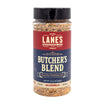
The original Lane's method starts with a thin binder of mayonnaise, olive oil, or duck fat spray, followed by a generous coating of Lane's Brisket Rub and Ancho Espresso Rub. Brisket builds the savory foundation while Ancho Espresso adds deeper chile, coffee, and cocoa notes to the crust.
Lane's Seasoning Options
Brisket + Ancho Espresso
The original pairing. Use Brisket as the savory base, then add a lighter coat of Ancho Espresso for color and depth.
Steak Supreme
Steak Supreme gives the tenderloin a classic steakhouse direction without requiring a second rub.
SPG
SPG Rub keeps the flavor simple with salt, pepper, and garlic when you want the beef and butter to lead.
Season Ahead
For deeper seasoning and a drier surface, apply the rub several hours ahead and refrigerate the tied roast uncovered. Keep it refrigerated until shortly before grilling.
Remove the tenderloin from the refrigerator while the grill preheats, generally 30–45 minutes before cooking. It does not need to sit out for hours or become fully room temperature.
Set Up the Grill for a Reverse Sear
The Lane's process uses two very different temperatures: 250°F for gentle roasting and 500–550°F for the final crust. You need indirect heat first and direct heat second.
Gas Grill
Light one side and leave the other side off. Cook the tenderloin over the unlit side with the lid closed, then finish over the lit burners after raising the heat.
Charcoal Grill
Bank the coals to one side and roast on the opposite side. Add fully lit charcoal if needed before the final sear.
Ceramic or Pellet Grill
Begin with an indirect setup at 250°F. Remove the roast while converting to direct heat or raising the cooker to its searing range.
Place a drip pan beneath the indirect side if your grill setup allows it. This helps manage drippings and reduces flare-ups when the grill later gets hot.
How to Reverse Sear Beef Tenderloin
- Preheat to 250°F. Confirm the temperature at the cooking grate and establish an indirect zone.
- Insert the thermometer. Position a leave-in probe in the center of the thickest section, not near the surface.
- Roast over indirect heat. Place the tied tenderloin away from the flame, close the lid, and cook until it approaches the pre-sear target.
- Use the original Lane's pre-sear target carefully. The original method removes the roast around 120°F for a medium-rare-style finish after searing and resting. Final temperature must still be verified because carryover varies.
- Begin the first rest. Move the tenderloin to a clean tray while raising the grill to 500–550°F and converting to direct heat.
- Add butter and another light seasoning. Place several small pieces of unsalted butter over the roast and lightly refresh the Brisket and Ancho Espresso rubs.
- Sear every side. Place the roast over direct heat and sear for about 1 minute per side, rolling it with tongs to brown the entire exterior.
- Check the center repeatedly. High heat moves the temperature quickly. Verify the final temperature rather than assuming each grill adds the same number of degrees.
- Rest again. Transfer to a clean cutting board, top with the remaining unsalted butter, and rest for 15–20 minutes before slicing.
Use tongs, not a carving fork. Tongs let you roll the tenderloin without unnecessarily piercing the meat. Also keep your face, eyebrows, and optimism away from butter-fed flare-ups.
Beef Tenderloin Temperature and Doneness
FoodSafety.gov recommends cooking whole cuts of beef to 145°F and allowing at least a 3-minute rest. Because this method includes a high-heat sear and a 15–20 minute final rest, the center will continue to rise after leaving the grill.
Lane's Original Medium-Rare-Style Method
Remove the tenderloin from the 250°F indirect cook around 120°F, then sear it over very high heat. Monitor during and after the sear because roast size and grill intensity determine the final rise.
USDA Safe Minimum
Verify a final temperature of 145°F and rest for at least 3 minutes. The Lane's method rests 15–20 minutes, which also makes carving cleaner and easier.
Insert an instant-read thermometer from the side into the center of the thickest section. Check more than one location if the roast is uneven. Do not let the probe sit in a gap created by folding the tail.
Why Cooking Time Is Only an Estimate
A trimmed 2-pound center-cut roast cooks differently from a 5-pound whole tenderloin. Grill recovery, outdoor temperature, starting meat temperature, and thickness all matter. Begin checking early and let internal temperature decide when each phase ends.
Why Beef Tenderloin Needs Two Resting Periods
Rest #1: Before the Sear
This pause gives you time to convert the grill from 250°F indirect cooking to 500–550°F direct heat. It also slows the center slightly before the aggressive final sear.
Rest #2: Before Slicing
The final 15–20 minute rest allows carryover cooking to settle and gives the juices time to redistribute. Top the roast with unsalted butter to build the Lane's board juice.
Tent the roast loosely if needed, but do not wrap it tightly. A tight foil package traps steam and softens the crust you just worked to build.
How to Slice and Serve Beef Tenderloin
- Remove every piece of twine. Do this before slicing, not after somebody finds it with a steak knife.
- Use a sharp slicing knife. Hold the roast steady with tongs instead of piercing it with a fork.
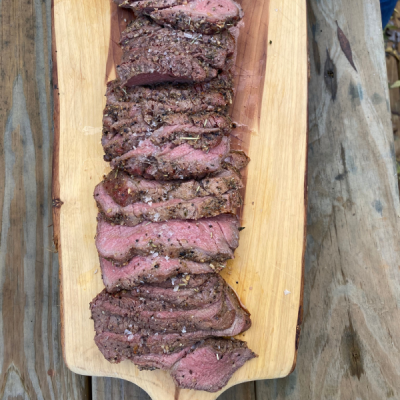
- Slice across the grain. Tenderloin grain runs lengthwise, so cut crosswise into medallions.
- Choose the thickness. Slice 1/2 inch thick for a crowd or closer to 1 inch for steakhouse-style portions.
- Spoon over the board juices. Mix the melted butter with the resting juices and drizzle a little over the slices before serving.
What to Serve with Grilled Beef Tenderloin
Keep the sides classic: roasted or grilled potatoes, asparagus, mushrooms, green beans, a crisp salad, or crusty bread for the board juice. Horseradish cream, chimichurri, or a simple pan-style sauce can be served on the side without covering up the crust.
Beef Tenderloin Troubleshooting
The Thin End Overcooked
The tail was not tucked or tied evenly. Fold it under before tying, or separate an extremely thin end and cook it as a smaller roast.
The Crust Is Pale
The grill was not hot enough, the surface was wet, or the roast moved too often. Dry the meat, fully preheat the direct zone, and give each side about a minute to brown.
The Outside Burned
Butter or seasoning flared over direct heat. Move the roast immediately, close the lid only when appropriate for your grill, and finish with shorter turns over a clean hot grate.
The Center Overshot
The roast stayed on through the sear too long or carryover was underestimated. Remove it earlier next time and check the center between every side of the sear.
The Roast Cooked Unevenly
Uneven thickness, poor tying, or a grill hot spot is usually responsible. Rotate during indirect cooking and verify temperature in more than one section.
The Slices Lost Their Juices
The roast was sliced too soon. Give it the full 15–20 minute final rest and use a sharp knife that cuts cleanly instead of pressing down on the meat.
Grilled Beef Tenderloin FAQs
What temperature should I grill beef tenderloin at?
Use 250°F over indirect heat for the gentle roasting phase, then raise the grill to 500–550°F over direct heat for the final sear.
What is the safe final temperature for beef tenderloin?
FoodSafety.gov recommends cooking whole cuts of beef to 145°F followed by at least a 3-minute rest. The Lane's method uses a 15–20 minute final rest.
How long does beef tenderloin take on the grill?
Cooking time varies significantly with weight, thickness, starting temperature, grill setup, and weather. Use time only for planning and let internal temperature determine when to sear and remove the roast.
Should I sear beef tenderloin before or after indirect cooking?
The Lane's method reverse sears the tenderloin. Cook it gently over indirect heat first, then finish over 500–550°F direct heat for about 1 minute per side.
Do I need to trim the silver skin from beef tenderloin?
Yes. Silver skin is tough connective tissue that does not soften during grilling. Remove it with a sharp knife while taking off as little meat as possible.
Why should beef tenderloin be tied?
Tying creates a more uniform cylinder so the roast cooks evenly. Fold the thin tail underneath and tie the tenderloin every 1 1/2–2 inches.
What is the best Lane's seasoning for beef tenderloin?
Lane's Brisket Rub and Ancho Espresso Rub are the original recommended combination. Steak Supreme and SPG are excellent alternatives for a more traditional steak profile.
How long should grilled beef tenderloin rest?
Rest it briefly while the grill heats for searing, then rest the finished tenderloin for 15–20 minutes before removing the twine and slicing.
How do I slice a beef tenderloin roast?
Remove the twine and cut crosswise against the grain with a sharp slicing knife. Use 1/2-inch slices for a crowd or thicker medallions for steakhouse-style portions.
Reverse Sear It, Rest It, Then Take the Compliments
A grilled beef tenderloin does not need tricks. Trim it cleanly, tie it evenly, season it well, and use indirect heat to control the center before building the crust over a seriously hot fire. Keep the thermometer close, respect both resting periods, and slice only when the roast is ready. The tenderloin handled the expensive part; your job is not to panic.


Leave a comment
All comments are moderated before being published.
This site is protected by hCaptcha and the hCaptcha Privacy Policy and Terms of Service apply.