







How to cook pizza on a smoker, gas grill, or ceramic grill
updated 07/30/2026
Pizza belongs outside. A hot grill can give you a crisp crust, bubbling cheese, lightly charred edges, and just enough wood-fired flavor to make the kitchen oven feel a little jealous.
You can cook pizza directly on clean grill grates, bake it on a pizza stone or steel, or use a pan when you want the easiest transfer. The best setup depends on whether you have a gas grill, pellet smoker, charcoal smoker, or ceramic grill. This guide walks through each method without pretending they all behave exactly the same. They do not. Grills have personalities, and some of them wake up angry.
What You’ll Need
Choose the Best Grilled Pizza Method
There is no single “correct” way to grill pizza. Choose the setup that fits your cooker, dough, comfort level, and willingness to slide raw dough from a peel while everybody watches.
Pizza pan or sheet pan
Build the pizza on a grill-safe pan and bake it over indirect heat. Transfer is simple, toppings stay where you put them, and the crust has support from beginning to end.
Pizza stone or steel
A properly preheated stone or steel stores heat and delivers it quickly to the dough. This creates strong oven spring and an evenly browned bottom.
Directly on the grates
Cook one side of the plain oiled dough, flip it, add toppings to the cooked side, then finish. This gives you char and crispness without special equipment.
A stone is not required. It is simply one of the best tools for turning a grill into an outdoor pizza oven. If your grill cannot safely support a stone or reach the temperature recommended by its manufacturer, use a pan or the direct-grate method instead.
Prepare the Dough and Toppings Before Heating the Grill
- Bring the dough toward room temperature - Cold dough fights back and tears more easily. Follow the dough package or recipe instructions, usually allowing enough covered resting time for the dough to relax before stretching.
- Prepare every topping - Slice vegetables thinly, drain wet ingredients, shred the cheese, and fully cook raw sausage, bacon, chicken, or other meat before it goes on the pizza.
- Keep the pizza manageable - A 10–12-inch pizza is easier to transfer and rotate than one large enough to require its own ZIP code.
- Stretch without crushing the rim - Press from the center outward, leaving a slightly thicker border. Stretch by hand or use a rolling pin if that is what gets dinner made.
- Use a lightly dusted peel - Flour or semolina helps raw dough slide. Build quickly and shake the peel occasionally to confirm the pizza still moves.
- Top lightly - Use a thin layer of sauce, evenly distributed cheese, and restrained toppings. Too much moisture or weight gives you a cooked top sitting on a soft middle.
Do the shake test. Before walking to the grill, give the peel a short forward-and-back movement. If the pizza slides, you are ready. If one area sticks, lift that edge and add a small amount of flour or semolina before the situation becomes a calzone against its will.
For extra flavor, sprinkle Lane’s Garlic² Rub lightly over the crust, cheese, or finished pizza. A little seasoning goes a long way when the toppings already bring salt.
How to Cook Pizza on a Gas Grill
A gas grill gives you fast preheating and precise zone control. The key is creating a hot side and a cooler side so you can brown the crust without sacrificing the cheese to the pizza gods.
- Clean the grates - Preheat briefly, brush the grates clean, and make sure there is no heavy grease buildup that could flare.
- Create two zones - On a multi-burner grill, heat one side and leave the other burner off or lower. Preheat with the lid closed. For direct-grate pizza, aim around 425–450°F. For a stone, use roughly 450–500°F unless the grill or stone manufacturer specifies otherwise.
- Choose your cooking surface - Place a stone on the cold grill before preheating, set a grill-safe pan over indirect heat, or use the direct-grate method below.
- Launch and close the lid - Slide the pizza onto the preheated stone, steel, or pan and close the lid so the grill surrounds it with heat.
- Rotate as needed - Gas grills often run hotter near the back or above active burners. Check the bottom after a few minutes and rotate the pizza for even browning.
- Move away from heat if necessary - If the crust browns before the cheese melts, move the pizza to the cooler zone and close the lid to finish.
- Remove and rest - Transfer the pizza to a board and wait 2–3 minutes before slicing. This lets the cheese settle and reduces the odds of wearing the first bite.
How to Cook Pizza on a Pellet or Charcoal Smoker
A smoker cooks pizza more like an outdoor convection oven and adds a layer of wood-fired flavor. Pizza cooks quickly, so the smoke will usually be pleasant and subtle rather than “I licked a campfire.”
- Set up for indirect heat - On a pellet grill, follow the manufacturer’s normal baking setup. On a charcoal smoker, keep the pizza away from direct flame and use a heat deflector when the cooker requires one.
- Preheat to 400–450°F - The original Lane’s method used 400°F, which works well for a pan or a slightly longer bake. Use 450°F or the smoker’s highest recommended baking temperature when you want a faster, crisper stone-baked pizza.
- Use a mild or medium wood - Oak, apple, cherry, and pecan all work well. Save stronger smoke for meat-heavy pizzas that can stand up to it.
- Preheat the stone if using one - Put it in before heating the cooker, then allow additional time after the smoker reaches temperature so the stone is hot throughout.
- Cook with the lid closed - A fresh pizza usually needs about 10–15 minutes around 400–450°F, depending on dough thickness, cooking surface, toppings, weather, and the smoker.
- Check the bottom and rotate - Lift an edge after several minutes. Rotate if one side colors faster than the other.
- Remove when the crust and top agree - Look for a browned bottom, set center, puffed edges, bubbling cheese, and hot toppings.
A pizza can technically cook directly on smoker grates, but uncooked topped dough is difficult to move and may sag between wide grate bars. A preheated stone, steel, or grill-safe pan is the more reliable choice. If you want to use bare grates, par-cook both sides of the dough before topping it.
How to Cook Pizza on a Ceramic Grill
A ceramic grill can hold high, steady heat and behave a lot like a brick oven. It can also trap intense heat below the pizza, so the indirect setup and stone position matter.
- Fill and light the charcoal - Start with enough lump charcoal for a hot cook and allow it to burn cleanly before adding the pizza.
- Set up for indirect baking - Install the heat deflector or convEGGtor in the baking orientation recommended by your cooker’s manufacturer. Add the cooking grate and pizza stone as directed for your model.
- Heat the cooker and stone together - Do not drop a cold stone into an already blazing grill. Bring the ceramic components up to temperature gradually.
- Stabilize around 500–600°F - Many ceramic cookers can bake pizza in this range, but dough style, stone, accessories, and manufacturer limits come first. A dough designed for a home oven may scorch at true wood-fired-pizza temperatures.
- Launch and cook quickly - Slide the pizza onto the stone and close the dome. Begin checking around 5 minutes at higher temperatures.
- Rotate once - Turn the pizza if the rear or fire-facing side colors more quickly.
- Burp the grill before opening - Crack the lid carefully according to the cooker’s instructions before opening fully. High-heat ceramic cookers can flash back when oxygen rushes in.
Use the setup made for your cooker. Ceramic grills differ in deflector orientation, spacers, stone height, airflow, and maximum accessory temperatures. Follow your grill and pizza-stone manuals first. Pizza is not worth sacrificing a ceramic part or your eyebrows.
How to Use a Pizza Stone on a Grill
A pizza stone absorbs and redistributes heat, helping the crust cook evenly and release moisture. The original article correctly emphasized preheating. The part worth adding is that the stone should heat gradually and needs more than a quick glance at the grill thermometer.
- Start with a cold grill and dry stone - Place the room-temperature stone on the grates before lighting or heating the grill.
- Set up indirect heat when required - Avoid placing a standard stone directly over an uncontrolled flame unless its manufacturer approves that use.
- Preheat thoroughly - Once the grill reaches roughly 450–500°F, give the stone another 15–30 minutes to heat through. Follow the instructions for your particular stone or steel.
- Dust the peel, not the stone - Use flour or semolina on the peel. Do not coat a hot stone with oil because absorbed oil can smoke and damage some stones.
- Launch the pizza - Use a short forward-and-back motion to slide the pizza onto the center of the stone.
- Cook with the lid closed - Begin checking around 7 minutes. Many pizzas finish in 7–12 minutes at this temperature.
- Let the stone cool naturally - Turn off the grill and allow the stone to cool in place. Water or a cold surface can cause thermal shock and cracking.
A pizza steel heats faster and transfers heat more aggressively than most stones. That can produce excellent browning, but it can also burn the bottom sooner. Use a lower placement, lower temperature, or shorter bake as needed.
How to Grill Pizza Directly on the Grates
This is the best no-stone method for fresh dough. Do not build a fully topped raw pizza and attempt to drape it across the grates. Par-cook the dough first so it becomes strong enough to flip and top.
- Prepare two-zone heat - Preheat clean grates to roughly 425–450°F with a hot side and cooler side.
- Shape and oil the dough - Stretch the dough, then brush one side lightly with olive, avocado, or grapeseed oil.
- Grill the first side - Place the oiled side down over direct heat. Cook for about 2–3 minutes, just until the dough firms, releases, and develops light grill marks.
- Remove and flip - Transfer the crust to a peel or board with the cooked side facing up.
- Add toppings to the cooked side - Work quickly and keep the sauce, cheese, and toppings light. Brush the uncooked side with a little oil.
- Return to the grill - Place the uncooked side over direct heat for 1–2 minutes, then move the pizza to indirect heat and close the lid.
- Finish the top - Cook until the bottom is browned and the cheese is melted, usually another 2–4 minutes.
The exact timing depends on dough thickness and grill heat. Stay close. Direct-grate pizza is fast, and “I only stepped inside for a second” is the traditional opening line of a burned-pizza story.
Pizza Topping Rules That Prevent a Soggy Middle
- Cook raw meat first. Sausage, bacon, chicken, ground beef, and other meat toppings should be fully cooked before going on the pizza.
- Use low-moisture cheese. Fresh mozzarella is delicious, but drain and dry it well or combine it with low-moisture mozzarella.
- Drain wet vegetables. Tomatoes, pineapple, mushrooms, artichokes, and pickled toppings can release enough water to slow the crust.
- Slice toppings thinly. Outdoor pizza cooks quickly, so thick raw vegetables may still be crunchy when the crust is done.
- Use less sauce than you think. A thin, even layer gives flavor without turning the middle into soup.
- Do not overload it. Every topping is invited, but they cannot all sit in the front row.
Common Grilled Pizza Problems
The bottom burns first
Move the pizza farther from direct heat, lower the grill temperature, raise the stone if your setup allows, or use a thicker heat deflector. Check the bottom earlier on the next pizza.
The center stays soft
Use less sauce and fewer wet toppings, stretch the dough more evenly, preheat the stone longer, and avoid making the pizza too large or thick.
The pizza sticks to the peel
Dust the peel lightly with flour or semolina, build the pizza quickly, and shake the peel before launching. A wooden peel is often easier for launching raw dough.
The cheese will not brown
Keep the lid closed, make sure the grill is fully preheated, and use indirect heat long enough for hot air to circulate over the pizza.
The dough tears
Let cold or tight dough rest longer before stretching. Repair a small hole by pinching it closed, then use a smaller pizza that is easier to transfer.
The stone cracks
Thermal shock is the usual suspect. Heat and cool the stone gradually, keep it dry, and follow its instructions regarding direct flame, maximum temperature, and cleaning.
Lane’s Pizza Ideas for the Grill or Smoker
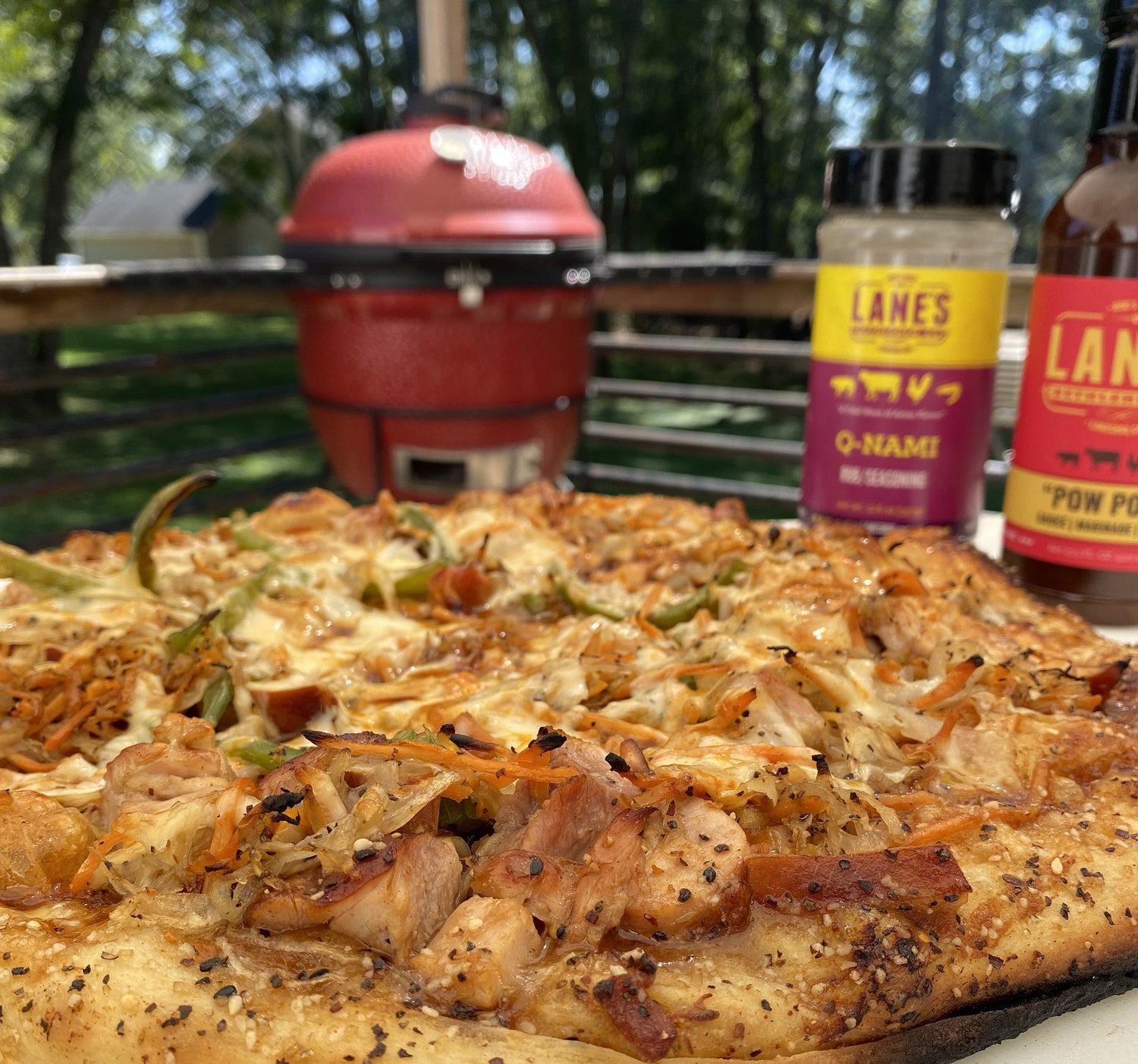
Once the cooking method is dialed in, the toppings are where things get fun. Leftover barbecue makes an excellent pizza because the meat is already cooked and ready for a quick outdoor bake.
- Sweet BBQ Pizza with leftover brisket or pulled pork, Kinda Sweet Sauce, Garlic², and Sorta White Sauce
- Pineapple Chipotle BBQ Chicken Pizza with chicken, pineapple, mozzarella, and Island Dust
- Spicy Buffalo Meat Lovers Pizza with cooked bacon, ham, sausage, Buffalo Sauce, and Garlic² butter
- Lil Spicy Hawaiian BBQ Pizza when sweet, smoky, and spicy all sound like the correct answer
Store-bought dough is completely acceptable. So is store-bought sauce. The grill does not check credentials. Prepare everything before heating the cooker, keep the toppings reasonable, and expect the first pizza to teach you where your grill runs hot. By pizza number two, you will look suspiciously professional.
FAQs — Cooking Pizza on a Grill or Smoker
What temperature should a grill be for pizza?
Use roughly 425–450°F for pizza cooked directly on the grates and about 450–500°F for most stone-baked pizzas. Ceramic grills may run around 500–600°F with the proper indirect setup. Always stay within the limits of your grill, stone, steel, pan, and dough recipe.
Do I need a pizza stone to cook pizza on a grill?
No. You can use a grill-safe pizza pan or cook the dough directly on clean grates. For the direct method, par-cook one side of the oiled dough, flip it, add toppings to the cooked side, and finish over a combination of direct and indirect heat.
How long does pizza take on a grill or smoker?
Most fresh pizzas take about 7–15 minutes, depending on grill temperature, dough thickness, cooking surface, toppings, and weather. Direct-grate pizza can cook faster, while a pan or a 400°F smoker may need the longer end of the range.
How long should I preheat a pizza stone on the grill?
Place the room-temperature stone on a cold grill, then heat them together. After the grill reaches roughly 450–500°F, allow another 15–30 minutes for the stone to heat thoroughly, or follow the stone manufacturer’s specific directions.
Can I put raw pizza dough directly on grill grates?
Yes, but start with plain, lightly oiled dough rather than a fully topped raw pizza. Grill the first side for about 2–3 minutes, flip it onto a peel or board, add toppings to the cooked side, then return it to the grill to finish.
What wood is best for smoked pizza?
Oak, apple, cherry, and pecan are versatile choices. Mild fruit woods work well with cheese and vegetable pizzas, while a slightly stronger wood can complement sausage, brisket, pulled pork, or other meat-heavy toppings.
Why is my grilled pizza crust burned underneath?
The cooking surface is too hot or too close to direct heat. Move the pizza to an indirect zone, lower the grill temperature, raise the stone when your setup allows, and begin checking the bottom earlier.
Can I cook a frozen pizza on the grill?
Yes. Use indirect heat and follow the temperature and timing on the pizza package when possible. Keep the lid closed, rotate the pizza if one side cooks faster, and avoid placing frozen pizza over direct flame unless the package specifically allows it.


Leave a comment
All comments are moderated before being published.
This site is protected by hCaptcha and the hCaptcha Privacy Policy and Terms of Service apply.