






How to clean a dirty griddle fast
updated 07/30/2026
Let’s face it: your griddle has seen some stuff. Bacon grease, burger crusties, pancake mishaps. It’s a battlefield out there. But cleaning it doesn’t have to be a big, dramatic ordeal. With help from our friend Benton Palmer with @GrillThisSmokeThat, we’re gonna show you how to clean that bad boy fast so you can get back to grilling greatness.
Whether you’re rockin’ a Blackstone or another flat-top griddle, the basic routine is simple: scrape, steam, wipe, dry, and protect the surface with a thin coat of oil. Spoiler alert: you probably already have what you need in your kitchen.
What You’ll Need
Before You Clean the Griddle
First thing: eat with your family. That’s why you cooked in the first place, and it is the most important part. Enjoy the meal and the quality time with your family and friends. The griddle can wait a few minutes.
Just don’t make it wait until next weekend. Clean the cooking surface after every use, preferably while it is still warm. Fresh grease and food residue are much easier to remove than buildup that has cooled, dried, and started applying for permanent residency.
Warm is the sweet spot. A warm griddle helps loosen residue, but the surface can stay dangerously hot long after the burners are turned off. Keep children and pets away, use long-handled tools, and never touch the surface or oil-soaked paper towels with bare hands.
How to Clean a Dirty Griddle Fast
- Warm the griddle - If the surface has already cooled, turn the griddle to medium heat briefly to loosen the stuck-on grease and food. Then turn the burners off before cleaning and follow your griddle manufacturer’s instructions. If you are cleaning right after cooking, let the surface cool from blazing hot to warm first.
-
Scrape toward the grease trap - Hold a metal scraper or spatula at a shallow angle and push the greasy, crispy residue toward the grease opening. Keep the flat edge against the surface instead of digging in with a corner.
- Work in lines or zones so you cover the whole cooking surface.
- Use steady pressure without gouging or chipping the seasoning layer.
- Empty the grease cup once it is cool enough to handle.
-
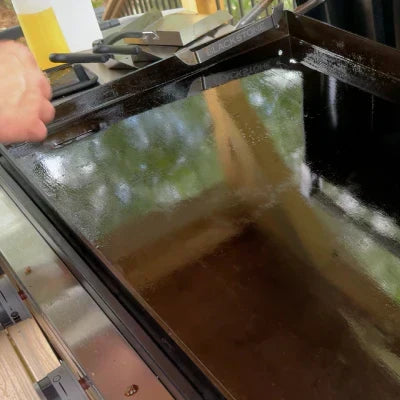
Add water to loosen what remains - Apply a small amount of water to the warm griddle. The steam helps release stubborn residue. Scrape the loosened mess toward the grease trap and repeat in small sections as needed.
Do not dump a large amount of cold water onto an extremely hot griddle. Sudden temperature changes may warp metal, and the burst of steam can burn you. A controlled squeeze bottle is your friend here.
- Wipe the surface clean - Use long-handled tongs or your scraper to hold folded paper towels and carefully wipe away the remaining water and debris. Repeat the water-and-wipe combination until the residue is gone and the liquid coming off the surface is mostly clear.
- Dry the griddle completely - Water left on steel invites rust. Wipe the surface dry, then use low heat briefly if necessary to evaporate any remaining moisture. Turn the burners off when the surface is dry.
- Apply a very thin coat of oil - Add a small amount of cooking oil and use paper towels held with tongs to spread it across the entire cooking surface. Wipe away the excess. You want a thin protective film, not an oil slick.
Lane’s pro tip: If your metal spatulas or scraper picked up cooked-on grease during dinner, set them on the warm griddle briefly and scrape them clean before you finish the cooking surface. This applies only to heat-safe metal tools. Keep plastic, silicone, wooden handles, and anything your manufacturer does not rate for high heat off the hot surface.
What About Stubborn, Crusty Buildup?
Start with another small amount of water on the warm surface, allow the steam to loosen the residue, and scrape again. Several light passes are better than trying to chisel everything off in one heroic swing.
Griddle pad
A non-damaging pad approved by your griddle manufacturer can help with residue that survives scraping and steaming. Use light pressure and follow the directions for your specific cooking surface.
Griddle stone or grill brick
A stone can help with severe buildup or rust, but it is abrasive and may remove part of the seasoning layer. Check the manufacturer’s instructions first and plan to reseason the surface afterward if needed.
Skip random household cleaners. Do not use oven cleaner, harsh degreasers, or another chemical product on the cooking surface unless its manufacturer specifically approves that use. Residue, corrosion, and a ruined seasoning layer are not the flavor profile we’re after.
Can You Use Soap to Clean a Griddle?
There is no universal answer for every flat-top griddle. Blackstone says soap is useful for the initial cleaning of a brand-new griddle but unnecessary for routine cleaning after the surface has been seasoned and used. Camp Chef permits hot water and mild dish soap on its seasoned griddles. That means the right answer is simple: follow the care instructions for your exact brand and model.
For the fast after-cook method shown here, water, scraping, wiping, thorough drying, and a thin coat of oil are usually all that is needed. The grease cup and removable non-seasoned parts may have separate washing instructions, so treat those according to the owner’s manual.
How to Help Prevent Griddle Rust
Once the griddle is clean, getting it completely dry and adding a thin protective layer of oil are the two most important finishing steps. Water, air, and exposed steel are the rust trio nobody invited to dinner.
Remove every bit of cleaning water before the griddle cools and goes into storage.
Spread a very thin coat of cooking oil across the clean surface and wipe away the excess.
Once the griddle is fully cool, cover it and store it somewhere dry according to the manufacturer’s instructions.
If you already see rust, regular after-cook cleaning is not enough. Follow your manufacturer’s restoration process, which may involve scraping, oil, an approved griddle stone or pad, and fully reseasoning the cooktop.
Done and Dusted. Literally.
Your griddle is now clean, protected, and probably wondering when it’s getting bacon again. Keeping up with this quick routine helps your food taste better, prevents layers of old residue from building up, and gives that cooking surface a much better shot at a long, happy life.
The whole routine comes down to six moves: warm it, scrape it, steam it, wipe it, dry it, and oil it. Do that after every cook and the next cleanup should stay fast.
FAQs — Fast Griddle Cleaning Tips
How often should I clean my griddle?
Clean the cooking surface after every use. A quick scrape, wipe, thorough drying, and thin coat of oil while the griddle is still warm helps prevent stubborn buildup and rust.
What is the best oil to protect a griddle after cleaning?
Use a neutral cooking oil approved by your griddle manufacturer. Canola, vegetable, avocado, and grapeseed oils are common options. Spread only a very thin layer and wipe away the excess.
Can I use soap and water to clean my griddle?
Follow the instructions for your exact brand and model. Blackstone says routine soap is unnecessary after a griddle has been seasoned and used, while Camp Chef permits mild dish soap. In every case, rinse as directed, dry the steel completely, and restore its protective oil layer.
Can I pour water on a hot griddle?
Use a small, controlled amount of water on a warm griddle to loosen stuck-on food. Avoid dumping cold water onto an extremely hot surface because the steam can burn you and sudden temperature changes may damage or warp the cooktop.
What is a griddle stone, and do I need one?
A griddle stone or grill brick is an abrasive cleaning tool used for stubborn buildup or rust. It is optional for routine cleaning and may remove seasoning, so confirm that your griddle manufacturer recommends it and reseason afterward if necessary.
Can I clean my griddle when it is cold?
Yes, but grease and cooked-on residue are generally easier to remove while the griddle is warm. If reheating is necessary, warm it carefully, turn the burners off, and use long-handled tools to protect your hands.
Why is my griddle sticky after I oil it?
A sticky surface often means too much oil was left behind. Apply a very small amount and wipe repeatedly until only a thin protective film remains. Thick oil layers can become gummy instead of creating a smooth finish.


2 comments
Scott
Great video. What brand and model is your griddle?
Randy Moody
That was the best how-to video on taking care of our BBQ equipment I’ve ever seen. Just awesome. Cheers!
Leave a comment
All comments are moderated before being published.
This site is protected by hCaptcha and the hCaptcha Privacy Policy and Terms of Service apply.